Showing posts with label Good Etc. Show all posts

Wednesday, November 28, 2012

Avoiding Commodifying Hurricane Sandy in 2012 Holiday Gift Guides: Some Tips

In the wake of Hurricane Sandy, there have been many responses to the natural disaster. Some have made too-soon (but funny) cocktails, others have donated generously, a select few are obsessively preparing for the next natural disaster, and some have moved on to holiday shopping. Then there are some who have combined a few of these responses: namely, the trend of holiday shopping for survival gear. Numerous websites and blogs have posted gift guides for disaster gear (“disaster preparedness is all the rage right now”) and while some of them are well-intended others risk capitalizing on a tragedy that many people are still experiencing. Where is the line between smart, informed, if not a little paranoid, gift guides and the commodification of a natural disaster?

Here are some helpful tips for those flirting with the idea of creating a survival gift guide to help them avoid the slippery slope of taboo:

-Avoid bombarding your guide with pet-saving gear, such as doggie life vests, portable purifying cat water fountains, etc. #RichPeopleProblems.
-Items such as water wicking pants, rain resistant jackets, and water-proof matches are not helpful when half of Manhattan has flooded. Having water bead instantly on one’s pants cannot help them when their home is destroyed.
-Do not give people compasses. Only Eagle Scouts know how to read them properly and unless you think your friends and family will find themselves in a natural disaster in the Yukon, consider an iTunes gift card as a stocking stuffer instead.
-Those flashlights that you have to crank to turn on are just not useful so stop putting them in your gift guides.

Wednesday, November 7, 2012

Marriage Equality in Maine and Maryland!

Huzzah!

Monday, October 22, 2012

What is the Future of Lifestrong?: Livestrong in Crisis After Armstrong is Stripped of Medals and Is Banned for Life From the International Cycling Union Today


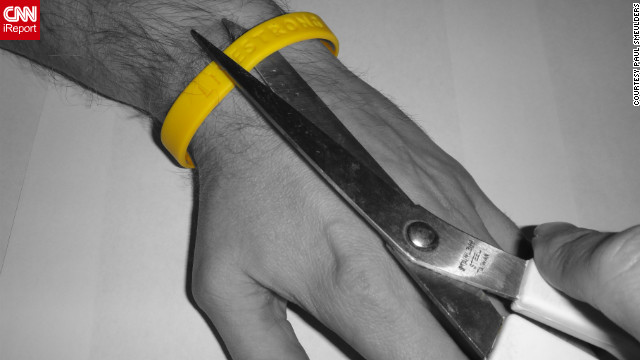
The Livestrong bracelet was a staple of the 2000s as a symbol of solidarity, support, passion for a cure, and American patriotism. Now, 15 years after the charity’s inception, its founder, board member, and face, Lance Armstrong, is stripped of his medals and banned from the International Cycling Union for life today. Armstrong is still very much the face of Livestrong, as much as the foundation has created a legacy for itself, and the new association between the athlete and his cheating spills over into an association between his cheating the American public’s faith in Livestrong and Livestrong itself. This leaves the inevitable question: what is the future of Livestrong?

As Loren Steffy of the Houston Chronicle observes, “It's tempting to compare Armstrong's departure with that of a business losing a CEO who personifies the company.” While some argue Livestrong is not necessarily synonymous with Armstrong anymore, it is not terribly convincing. Aside from the obvious that the name of the charity is a play on the name of the disgraced athlete, the trend of sporting a yellow wristband was not only a symbol of a pledge to cancer research but also an image of solidarity with Armstrong and other cancer survivors. How can we move beyond that empathy the wristband evokes for a failed icon and toward supporting a worthy cause?

In some ways, it doesn’t matter who the name is on the flier. Yoko Ono, one of the most disliked celebrities of all time, is a longtime supporter of the Spirit Foundation and has successfully elevated the foundation’s net worth and status. Even if the name is in the charity, sometimes no one cares. David Copperfield’s David Copperfield’s Project Magic Fund is one of the top celebrity charities according to USA Today, which is no small feat considering how, apparently, easily mockable he is.

In the case of Livestrong, it is not clear how much Armstrong’s demise will affect the charity, the name, or the cause. The charity raised $2.5 million last week, suggesting that the folks behind the charity are not wasting time in asserting a message of progress instead of defeat. Armstrong, meanwhile, has sent mixed messages. The day after the USADA report was released, he Tweeted, “"What am I doing tonight? Hanging with my family, unaffected, and thinking about this.” Inspiring stuff.

Here’s to Livestrong reinventing itself beyond Lance. Clink.

Thursday, June 28, 2012

Spotlight: Media That Matters Film Festival


Each June, Media That Matters Film Festival debuts a collection of twelve shorts under twelve minutes. The festival is one of the first and largest online film festivals and uses independent media to inspire civic engagement. In its eleventh year, the festival debuted films about female firefighters in Burning Barriers, a low-income dancer from Oakland in Sick Wid It, a call to action to prevent infant deaths in India in It’s In Your Hands, and nine others.

The festival has had other popular films, including 2006’s Something Other Than Other about a multiracial couple’s reflections on their youth and hopes for a future in which their son is able to check a box for his race other than “other.” The Media That Matters’ most famous films include AGirl Like Me, which was made by a sixteen year old girl in Harlem and draws attention to problematic beauty standards for African American girls, and World on Fire with Sarah McLachlan that compares the cost of a media set in LA with that of international aid from bicycle ambulances in Nepal to West African educational film screenings for refugees.

What is unique about the Media That Matters Festival is that it provides justice-based content that is immediately and publicly available. This interview with Katy Chevigny, founder of the organization behind the festival, Arts Engine, sheds light on the impact of short films that are available online plus their reception in the art and nonprofit communities. The festival actively manifests its mission to “engage diverse audiences and inspire them to take action” because it is available to anyone with access to the internet. Chevigny points out that while the festival does not inhabit a physical space, it is constantly in flux and is engaged with external audiences online as well as the internal community of filmmakers.

Take a look at this year’s twelve films here.

Wednesday, June 27, 2012

Pride 2012: Transgender Awareness in Pop Culture

 
Pride 2012 was celebrated around the world this weekend from Chicago, where there was a record number of crowds with an estimated 850,000 people, to Thessaloniki, Greece, where they celebrated their first pride with 2,000 attendants. The LGBTQA community has seen progress this year—notably President Obama’s endorsement for gay marriage—and is continuing its work for equality.

This past year has witnessed the rise of transgender figures in pop culture, thus honoring testimonials, inviting activism, and giving voice a still too often silenced community.

Glee’s new character, Unique, a.k.a. Wade Adams, made her premier performing Boogie Nights as a transgender woman. The Gay and Lesbian Alliance Against Defamation, GLAAD's, article on the Fox show's new character highlights the importance of Unique’s self-identification as a woman, not a gay man, distinguishing her from her gay peer, Kurt Hummel, and promoting transgender awareness.

Cher’s son, Chaz Bono, who publicly announced the beginning of his transformation in 2009, has been a key figure in pop culture and in the LGBTQA community this year. Bono was awarded the outstanding documentary prize and Stephen F. Kolzak Award at the 2012 GLAAD Awards for his documentary, "Becoming Chaz,” and rumor has it he will star in an upcoming dating show.

Jenna Talackova, Miss Canada 2012, was disqualified from the Miss Universe competition in March because she was not “naturally born” a woman. Yet thanks to Talackova’s fighting back and the international support she inspired, the Miss Universe beauty pageant will now allow transgender women to participate. Critics and activists praise the move as an inclusive step for transgender women worldwide in pop culture, sports, politics, and the workplace.

Laura Jane Grace, formerly Tommy Gabel and Against Me! founding member, publicly announced his transition to being a woman earlier this year. Check out this amazing Rolling Stone article that follows Laura as she begins her transition. It sheds light on the lived experience of a person undergoing transition, explaining: “For as long as he can remember, Gabel has lived with a condition known as gender dysphoria. As the textbooks explain it, it's a feeling of intense dissatisfaction and disconnect from the gender you were assigned at birth. As Gabel explains it, "The cliché is that you're a woman trapped in a man's body, but it's not that simple. It's a feeling of detachment from your body and from yourself.”

Friday, June 15, 2012

The GAP and JCPenney: Disrupting Heteronormativity in Advertising


The recent JCPenney ads for Mother’s and Father’s Day and the new GAP ads that feature same-sex couples and parents have caused controversy, primarily from the conservative group, One Million Moms. Their response, fueled by anger over JCPenney’s hiring Ellen Degeneres as a spokesperson, claimed that including gay individuals and couples in advertising violated religious values. Their reaction included the following statement: "We must remain diligent and stand up for Biblical values and truth. Scripture says multiple times that homosexuality is wrong, and God will not tolerate this sinful nature."

The controversy over the ad campaigns do more than reveal homophobia and disagreements on definitions of values (see Ellen Degeneres’ response to the criticism): they disrupt the pattern of heteronormativity in advertising.

Heteronormativity is the social bias that assumes opposite-sex coupling is the norm. Our culture is heteronormative on a global level and is structured around the expectation that heterosexuality is the standard. For instance, individuals are never expected to come out of the closet as straight, only gay, because heterosexuality is assumed as the norm. Being gay, therefore, is a deviation from being straight, a term that implies a standard model. Advertising reflects this standard: erectile dysfunction ads never depict two men, Father’s Day and Mother’s Day ads (until now) have not portrayed same-sex parents, insurance and home security ads feature nostalgic montages of opposite sex couples and their families, and Valentine’s Day jewelry ads always depict a male gift giver and a female receiver.

GAP and JCPenney’s inclusive ad campaigns deconstruct heteronormative marketing by including same-sex couples and representing the unacknowledged LGBTQ partner, parent, and shopper. While some have criticized the companies for displacing advocacy with marketing, their choice to portray and therefore recognize gay individuals, couples, and families is nevertheless significant in disrupting systems of heteronormative dominance and standards.

Saturday, May 26, 2012

Slut, And Other Bad Words: What Should Be Reclaimed?


When Rush Limbaugh discussed Georgetown law student, Sandra Fluke, and her testimony to House Democrats supporting mandated insurance coverage for contraception, he chose to label her based on her testimony a “slut” and a “prostitute.” Limbaugh’s word choice infuriated feminists, lawmakers, medical professionals, and women who noted that Fluke’s argument for contraception coverage included non-birth control reasons and that, more importantly, women who do use contraception for such purposes are not inherently sexually promiscuous, irresponsible, or unentitled to their own sexuality.

This reaction to Limbaugh’s controversial word choice also reignited the debate over reclaiming the word “slut” that was most popularized by the 2011 SlutWalk.

The SlutWalk, a response to a Toronto police officer’s offhand comment that “women should avoid dressing like sluts” in order to avoid rape, was a series of rallies worldwide in which “reclaiming, or more accurately, reappropriating the word ‘slut’ is a fundamental cornerstone of the movement.” The SlutWalk created widespread debate among feminists about reclaiming the word “slut” for twentieth century feminism.

The question these debates raise is, what should be reclaimed?

The word “queer” is an example of a largely successful reclamation of a once derogatory word that represented heternormative power structures. Its reclamation in the 1980s resisted the oppressive, homophobic connotations by providing the LGBTQIA community with a much-needed inclusive umbrella term for non-heterosexual and non-gender-binary individuals.

The challenge with reclamation arises when a word has a varied significance across spheres because when one group reclaims it and uses it as an empowering statement, it could potentially reinforce the problematic hegemonies it represents in other groups. For example, “cunt” is still popularly considered a derogatory term for women and social attitudes toward female genitalia, yet some feminists like Eve Ensler of The Vagina Monologues have been trying to reappropriate the word since the 1970s. Forty years later, the word and its power are still undecided upon.

When debating reclamation, advocates need to ask themselves: what about the term or phrase is being reappropriated and why? In the case of “slut,” what does reusing the word do for feminism? Does it have the potential to inspire new understandings of women’s sexuality? Or should there be a new word altogether to signify this attitude? What is there to be achieved in reclaiming instead of discarding any word for a social movement?

Friday, May 11, 2012

30th Anniversary Celebration: Lessons on Global Citizenship in Barbara Cooney’s 'Miss Rumphius'


“When I grow up, I, too, will go to faraway places, and when I am old, I, too, will live by the sea.”
“That is all very well, little Alice,” said her grandfather, “but there is a third thing you must do.”
“What is that?” asked Alice.
“You must do something to make the world more beautiful.”
~~~

In its 30th anniversary year, Barbara Cooney’s 1982 children’s book, Miss Rumphius, continues to share a relevant message of social justice, environmentalism, transnationalism, feminism, and personal existential fulfillment. The book, which was awarded the National Book Award for Children’s Books, tells the story of Alice Rumphius who lives out three things her grandfather tells her she must do in life: travel, live by the sea, and make the world more beautiful.

Miss Rumphius succeeds with the first two in her young adult life; traveling to Egypt, tropical islands, Australia, the Alps, and living in a cottage by the ocean. During this time, she learns to be a global citizen as a pseudo-intellectual librarian, a camel-rider, a small time botanist, Alps climber, and friend of a maharaja. Yet the main conflict of the story revolves around how she will make the world more beautiful. After being bedridden in her older age with back pain in her seaside cottage, she becomes enchanted with the lupines that bloom outside her window in the spring, and she decides to plant lupine seeds around her town when she is well again. The flowers become both an act of renewal after her physical illness and the seasonal winter, and an act of civic engagement.

The story’s deceptive simplicity within the guise of a children’s book does not distract from its significance in advocating for a life of activism, transnationalism, environmentalism, and feminism. As a single woman, Miss Rumphius furthers a legacy of social awareness, engagement with the global community, environmental justice, women’s agency on a global scale, and empowerment that her grandfather had fulfilled before her. Her praxis in making the world more beautiful by planting lupines creates micro level change that inspires macro level ethics at the end of the book when she tells her young niece that she, too, must do something to make the world more beautiful in her life. The niece, our narrator, closes the story saying, “I do not know yet what that can be,” transforming Miss Rumphius’ activism into advocacy for future generations to continue to make the world more beautiful.

Wednesday, May 2, 2012

The Crisis of Gender Representation: Why Is There So Much Press About HBO’s "Girls"?


Lena Dunham’s new HBO show, Girls, has only aired three episodes and is already the most Tweeted-about show ever. It has been criticized all over the internet for failing to represent twentysomething women accurately, for glorifying privilege, and for being whitewashed.

To review: In a recent Jezebel article, Madeleine Davies laments, “The show felt oddly alienating, managing to be both too broad and too niche all at the same time.”

Jenna Worthman of The Hairpin writes, “Girls was supposed to be for the people, by the people. It is for people like me… who were hungry for something relatable, something real.” She shamefully admits she likes the show because “It Gets. So. Many. Things. Right” but adds, “I just wish I saw a little more of myself on screen.”

John Cook of Gawker just does not like Girls, opening his first recap with, “Girls is a television program about the children of wealthy famous people and shitty music and Facebook and how hard it is to know who you are.” He also points out that the only person of color in the pilot is "a magical jolly homeless black man."

While some of these critiques of privilege, unrelatablility, and the show’s white monopoly hold strong value, the question is: Why is Girls talked about as if it were a failed manifesto for Generation Y women?

Given the multiple arguments that Girls is problematic because it claims to be a voice of a young, urban generation and instead is crippled from doing so because of its privilege and whiteness, why aren’t critics pointing to other shows with primarily affluent young white characters living in New York City? If this is the criterion for judgment, why not point fingers at How I Met Your Mother, Seinfeld or Friends as problematic representations of race and class? Why is Girls so unrelatable based on its portrayal of privilege and whiteness while these other shows manage to be relatable?

Could it be that this is a crisis of gender representation?

To borrow from literary theorist Edward Said, the “crisis of representation” refers to the anxiety over representing changing objects and entities, from race to genre to time period. Every representation inevitably fails to represent the whole because singular experiences always vary. In the case of Girls, could the large-scale criticism be informed by an anxiety of representing contemporary young women?

This is not a new phenomenon for shows about women. When Sex and The City came out, there was widespread criticism of the show’s representation of thirtysomething women as bourgeois and unrealistic (Carrie’s apartment has been extensively analyzed by real estate agents and it has been determined that, no, neither the fictional $2,800 rent nor the real $9,650,000 price tag are within her journalist price range). What is unique about the criticism of class and race in SATC and Girls is that such analysis has not been popularly applied to characters in Seinfeld or other coed shows.

The show, like nearly every other television show, is about a specific group. Why, then, is there so much pressure on Girls to represent young women on the whole?

More importantly, why is there so much anxiety over representations of women on predominantly female shows?

Wednesday, April 18, 2012

5 Cheers for Ashley Judd's 'The Daily Beast' Article*


  1. For drawing attention to a social system that pervades cultural, professional, social, physical, and intellectual spheres!
  2. For demystifying the prescriptive beauty myth!
  3. For distinguishing between social critiques based on action/merit and social critiques based on gender!
  4. For challenging gendered norms of beauty, sexuality, and health!
  5. For transforming self-recognition and self-worth from the physical to “personal integrity and [one’s] relationship with [their] Creator!”

5 Problems with Dr Pepper 10 Commercials


1. What does “10 manly calories” mean?
            2. The macho culture the ad prescribes is not a good model for 
            masculinity.
3. Dr Pepper 10’s Imagined Drinkers: Mr. T doing one-armed pushups, the Browny man cutting  down a tree in flannel, and Crocodile Dundee wrestling the love child of the Loch Ness Monster  and Bigfoot. The reality: these macho prototypes don’t exist. Thankfully.
4. Women can drive ATVs in the jungle, too.
5. Despite the attempt to find a niche with the man crowd like Dove Men+Care and MACH3 Razors for Men, Dr Pepper 10 has perpetrated problematic gender stereotypes for men and women in their ad campaign. Oops.