Showing posts with label Renaissance Woman. Show all posts

Saturday, September 7, 2013

Taking Sage Advice from Katy Perry and her Connection with her Spirit Animal in the “Roar” Music Video


We can all learn a little something from this musical shaman. In moments of strife (like surviving a plane crash with a useless pretty boy who gets eaten by a tiger), we can all channel our spirit animals and it will all be better (i.e. paint elephant’s toes and summon toucans whenever we like). Just follow KP’s lead.

Step 1: Encounter your spirit animal

In the face of tarantulas climbing on her shoulders, KP takes a beat to do some good old introspection. She looks in that lagoon like Simba in one of the most beautiful moments in cinematic history, and she sees her spirit animal. What a moment! Even the fireflies make the shape of a tiger for some unknown reason!

Step 2: Be great, but have no clue why

KP finds herself doing some courageous and resourceful things like making spears out of stilettos and showering with elephants. It is not clear why she has this newfound greatness, but it is there. Her spirit animal is in her but she doesn’t quite know it yet.

Step 3: Recognize your spirit animal and be even greater

KP discovers some hominid cave painting that lets her know everything she needs about her spirit animal: it is a badass. So she puts on something sexy and emerges in a palm frond skirt and leopard skin crop top! She does what she wants!

Step 4: Channel it!

When KP roars at the real life tiger, the message is clear to us mortals: channel the spirit animal! Be a champion and roar! Preach!

Thanks, KP. We all learned something today.

Sunday, February 10, 2013

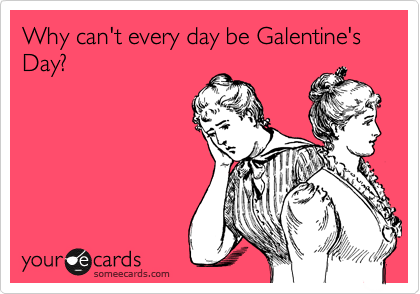
5 Things: Galentine's Day


Ladies, we celebrate! In the words of Leslie Knope, “ladies celebrate ladies” on Galentine’s Day (also known as February 13th). For further reading, click here.

There are your Galentine’s Day staples like eating frittatas and exchanging gifts likes mosaic portraits of your friends made from the crushed bottles of their favorite diet soda. But there are other ways to celebrate your lady friends being super people:

1.     A picnic (for southern hemisphere dwellers in February) with personalized paper accordion garlands made in shape of your gals’ faces
2.     Lingering celebrations at a hot dog stand exchanging amazing gifts like Lip Ringlosss Rings
3.     A classy wine bar evening at which you give your gals classy wine openers like this gem from Sky Mall
4.     Teatime with little sandwiches and macaroons giving everyone copies of Emily Post’s Etiquette, sparking conversation about Downton Abbey’s covetable dinnerware, clothes, and luggage (oh, the luggage!)
5.     A brunch event in which all members of the Galentine’s Day celebration perform slam poetry about each lady present, resulting in overall jealousy and awe at neighboring tables

Thursday, October 18, 2012

A Solution to the Debate Over Whether or Not Bond Girls Are Positive Representations of Women: Make Olivia Benson the Next Bond Girl


Skyfall is coming. The 50th anniversary of James Bond is upon us. And Adele wrote an awesome theme song that topped iTunes charts within ten hours of its release.

The new film and the coinciding anniversary has inspired some debate over the figure of the Bond Girl and whether or not she is an image of women’s empowerment. In one camp, we witness that Ian Fleming was considered “more sexist than some,” the damsel-in-distress narrative in the series too-often repeated, and the over-played association between Bond Girls and their appearance. Just the term “Bond Girl” leaves a funky taste, inspiring some to ponder “why not Bond Woman?” Yet some argue that the Bond Girl also evokes an image of strength, sexual freedom, and independence, particularly in modern incarnations like the “masculine” clothes-wearing Vesper Lynd of Casino Royale and the physically powerful Camille Montes of Quantum of Solace. The choice to cast M as a woman—Dame Judi Dench, no less—is a major achievement for representations of women.

So on the one hand, Bond Girls are dated, moving picture Barbies. On the other hand, Bond Girls are globe-trotting, sexually satisfied ladies. What to do, what to do…

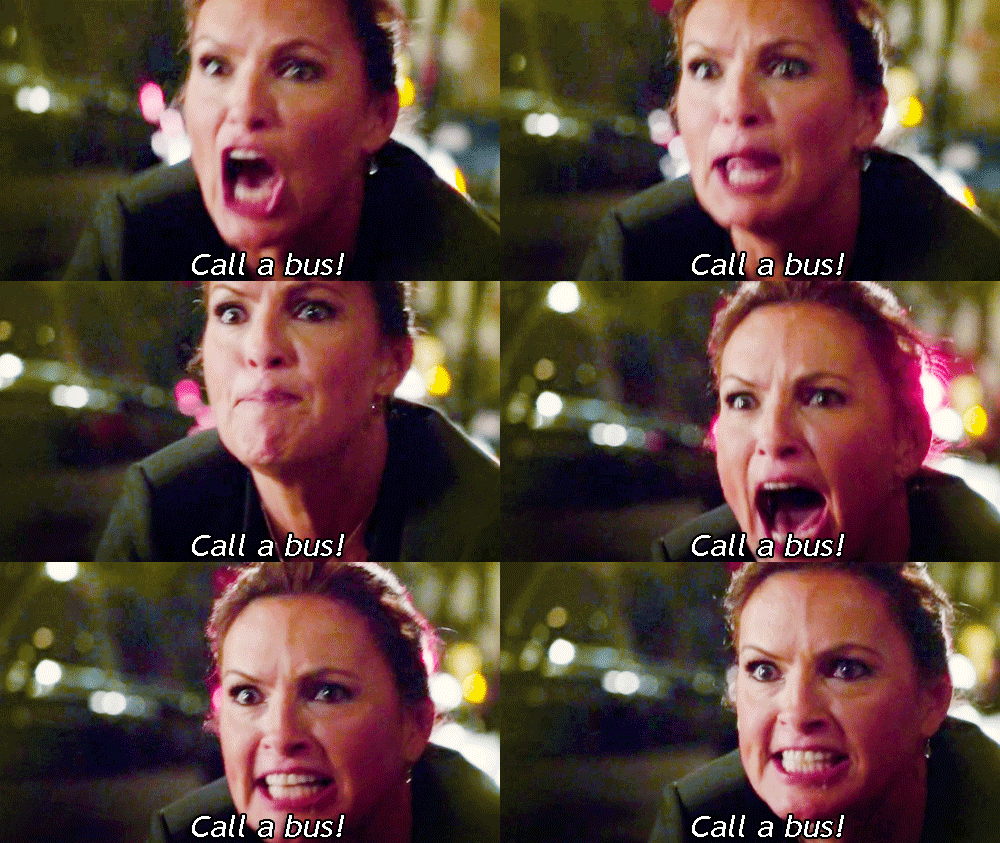
On the proverbial third hand, there is another solution to the current disagreement over the feminist or anti-feminist role Bond Girls have: make Olivia Benson the next Bond Girl.

Let us illustrate this using some word association:

Olivia Benson—Law & Order SVU—Stabler—love plot—no, just professional coworkers!—back to coworkers—Ice-T—knows what “sex on the downlow is”—Olivia is sexy—but not too sexy that we forget she’s a cop—back to sexy—chooses work appropriate shoes over implausible heels—heels—goes on dates all dressed up but often ends them early for work—work—single working woman—sounds familiar to many ladies—familiar—caring—she genuinely cares about her cases—heroic—heroine.

Let’s put this in a Bond-speak analogy:

Old Bond Girl: “My name is [insert ridiculous vagina slang name]” :: Olivia Benson: “let’s nail this sonofabitch.”

Benson is the heroine of her story. There is no debate over whether or not she is the sexual conquest who fires a shot or two or the smart, empowered woman of the world who gets to sleep with Daniel Craig. Debate settled.

DUN DUN.

Wednesday, September 26, 2012

Hip Hip Hooray: 3 Cheers for Balpreet Kaur’s Graceful Response to Reddit’s Insensitive Post


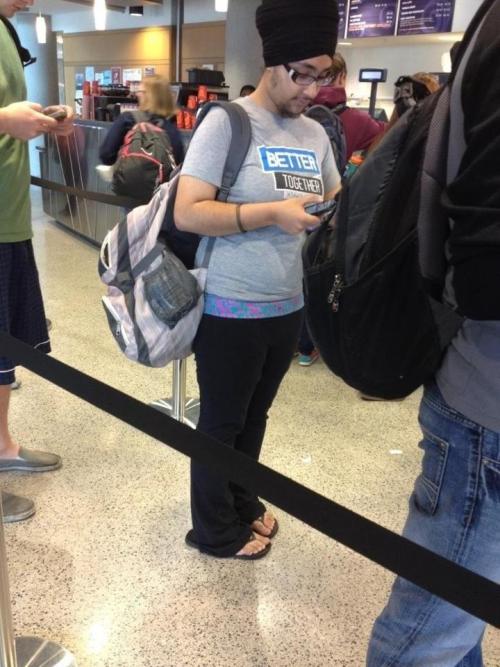
Reddit user “european_douchebag” (hold your comments) recently posted a photograph of Sikh woman and Ohio State University student, Balpreet Kaur, in the “Funny” section of the website with the caption, “I’m not sure what to conclude from this,” because of her visible facial hair. Kaur, president of the Sikh Student Association as a sophomore at OSU and aspiring neurosurgeon, responded with the most eloquent and graceful statement to the post, explaining that she is “not embarrassed or even humiliated by the attention [negative and positive] that this picture is getting because it’s who I am.” She writes:

“Yes, I’m a baptized Sikh woman with facial hair. Yes, I realize that my gender is often confused and I look different than most women. However, baptized Sikhs believe in the sacredness of this body - it is a gift that has been given to us by the Divine Being [which is genderless, actually] and, must keep it intact as a submission to the divine will. Just as a child doesn’t reject the gift of his/her parents, Sikhs do not reject the body that has been given to us.”

Kaur’s eloquence and confidence is a breath of fresh air that responds to intolerance by cultivating understanding and dialogue, not debate, across difference. Her statement even provoked “european_douchebag” to issue an apology, in which they conclude:

“So reddit I'm sorry for being an asshole and for giving you negative publicity.
Balpreet, I'm sorry for being a closed minded individual. You are a much better person than I am.
Sikhs, I'm sorry for insulting your culture and way of life.
Balpreet's faith in what she believes is astounding.”

3 cheers for Balpreet Kaur’s response to the Reddit post!

Hip: Kaur’s response creates religious and cultural tolerance by explaining some of the teachings of her faith that inform who she is and are different from Western culture. She uses this moment of ignorance as an opportunity for discussion and education, writing, “Just as a child doesn’t reject the gift of his/her parents, Sikhs do not reject the body that has been given to us.”

Hip: Kaur’s statement also affirms an acceptance of different standards of beauty by both being proud of her own and by providing a “transcendent” view of the body that is accepting of aesthetics, not judgmental of appearance. Kaur explains, “By crying ‘mine, mine’ and changing this body-tool, we are essentially living in ego and creating a separateness between ourselves and the divinity within us. By transcending societal views of beauty, I believe that I can focus more on my actions.”

Hooray: Kaur uses her words not as sticks and stones but as a tool for social awareness and tolerance. She uses the Internet as an opportunity to voice productive dialogue, not to continue anonymous cruel remarks. “So, if anyone sees me at OSU, please come up and say hello. I appreciate all of the comments here, both positive and less positive because I’ve gotten a better understanding of myself and others from this.”

Tuesday, September 25, 2012

5 Reasons Why Lady Gaga’s “Body Revolution 2013” Matters


Today Lady Gaga launched a response to the fuss over her recent weight gain. She recently acknowledged she gained around 25 lbs. but has made some conflicting comments about her attitude about her body in the past few months, sending mixed signals about body image acceptance for those who follow the mantra “Born This Way.” In April, she Tweeted: “Just killed back to back spin classes. Eating a salad dreaming of a cheeseburger #PopSingersDontEat #IWasBornThisWay” while this month she responded to the commentary about her weight gain with, “I really don’t feel bad about it, not even for a second.”

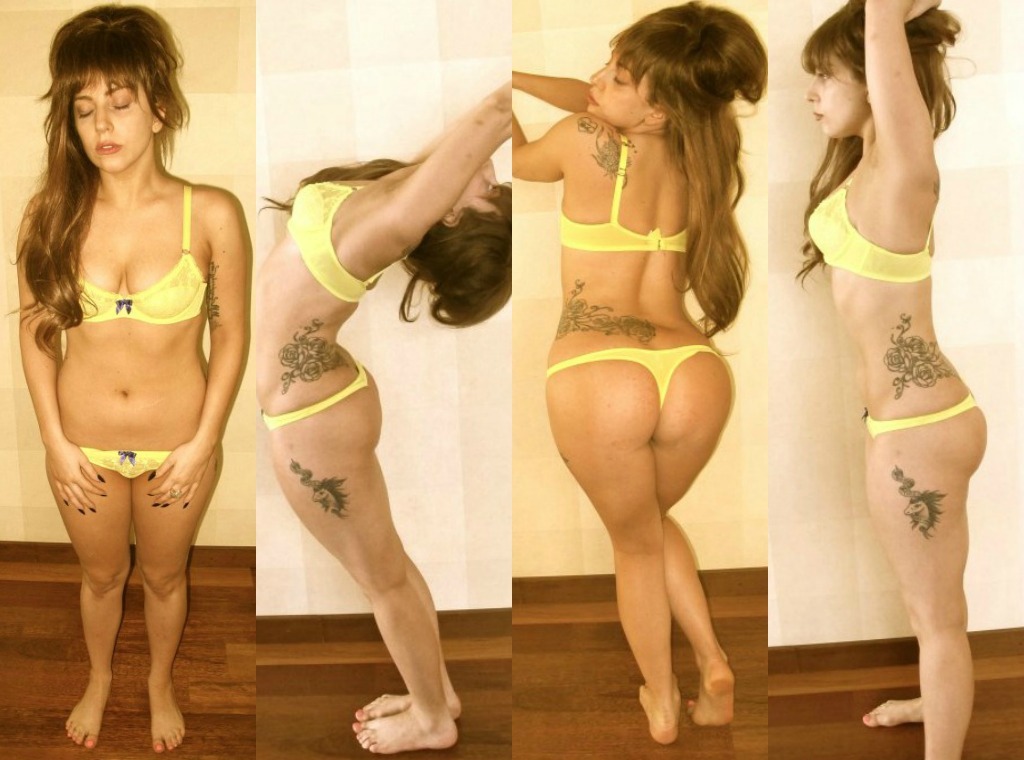
But today Lady Gaga set the record straight by announcing a “Body Revolution 2013” on LittleMonsters.com. She revealed her personal battle with anorexia and bulimia since 15 in a caption to a series of unretouched photographs of herself in underwear. She wrote:

“But today I join the BODY REVOLUTION.
To Inspire Bravery.
and BREED some m$therf*cking COMPASSION”

Lady Gaga also Tweeted naked photo of herself today, honoring her body in spite of the recent press about her weight gain, and announced call to action on Facebook.

Here are 5 reasons why Lady Gaga’s “Body Revolution 2013” matters:

1.     Lady Gaga is actively confronting the prevalence of fat-shaming prejudices in our culture as represented by the media. Her photographs on Twitter and LittleMonsters.com provoke rethinking of “fat,” “fat shaming,” and ultimately body image in general. Lady Gaga is using her celebrity to not only reveal a prejudice but to create a call to action.
2.     “Body Revolution 2013” reiterates the affirmation, “Born This Way,” in the context of body image and self-love. As Dodai Stewart observes in Jezebel’s breakdown of Gaga’s “embodying bravery”, “By posting these homemade, raw, here-I-am-with-all-my-flaws (not that we see any) images, she shows that her struggle is the same struggle millions of other men and women have everyday: Learning to love yourself just the way you are, finding and believing you are beautiful when the media is hellbent on making you think you're fat and ugly (and that fat is the same as ugly).”
3.     It made Terry Richardson, who isn’t always the poster child of positive portrayals of women, speak up. Richardson defended Gaga and, whether he meant to or not, defended the acceptance of bodies by posting “Lady Gaga Unretouched #1” on his online diary.
4.     The portraits from LittleMonsters.com acknowledge the body beyond its aesthetics by celebrating physical ability. In one photo, Lady Gaga is in the yoga pose, Anyvittasana, or Standing Backbend, honoring her body in physical practice.
5.     Today’s announcement creates awareness about eating disorders because Gaga gives voice to the realities of anorexia and bulimia. Lady Gaga gives a face to this often typified reality with her self-portraits in her underwear, and the juxtaposition between the distorted, unflattering photos of her in Amsterdam and her personal photos suggest that society’s warped perceptions of beauty have in part been caused and perpetrated by the media that recently fat-shamed the singer.

Wednesday, September 5, 2012

Nina Simone’s Upcoming Biopic: Negotiating Between the Representation and the Legacy

 
Nina Simone, the Jazz singer, songwriter, pianist, civil rights activist, and High Priestess of Soul is about to be honored in a biopic staring Zoe Saldana. Not everyone is happy about it.

The biopic is unauthorized by Simone’s estate and is heavily criticized by the singer’s daughter Lisa Celeste Stroud, who goes by the stage name, Simone, for biographical and casting reasons. The choice to cast Saldana has caused the most controversy around the film because of Saldana’s lack of resemblance to Simone, which is significant because the singer was discriminated against and told she would not be successful because of her appearance. According to the singer’s daughter “As a child, my mother was told her nose was too big and she was too dark.” Saldana does not share those physical attributes, thus she would not illustrate the aesthetic that Simone was prejudiced against for, and Stroud would prefer “women with beautiful, luscious lips and wide noses and who know their craft” to portray her mother accurately.

More criticism of the film arose around the portrayal of a love plot between Nina Simone and her manager, Clifton Henderson, in the film. According to Stroud, “Clifton Henderson was gay. He was not attracted to women. So, the truth is…Nina Simone and Clifton Henderson NEVER had a relationship other than a business one.” Further criticism of Simone’s dark side has arisen over the concern that it will be either glossed over as a mere lapse in judgment or as an incriminating part of Simone’s character. Either way, it could oversimplify what Stroud doesn’t want compressed: that “the whole arc of her life which is inspirational, educational, entertaining and downright shocking at times is what needs to be told THE RIGHT WAY.”

The controversy over Nina Simone’s upcoming biopic illuminates more than the importance of biographic accuracy and the casting of lead roles: it also highlights the importance of not wrapping up a person’s life in a pretty little bow within the biopic genre. As Landon Palmer writes on the limitations of biopics, “the biopic traditionally, in a strange way, positions itself as ‘the last word’ on its subject’s life, as the final negotiation between the public and private persona.” The biopic must negotiate between representation and oversimplification, which is a hard balance to maintain especially for legendary figures that tempt directors to either live up to the figure’s hype or deconstruct the perfection of celebrity, both resulting in typifying the real person.

Solvej Schou writes in Entertainment Weekly, “How do you recreate or reinterpret that, the breath of a musician’s life, their art, as a biopic, on film?” The answer is, clearly, with difficulty.

In the case of Simone, her biographical history is important insofar as it tells a story of race, from the issue of her aesthetics to her rejection from the Curtis Institute for what she believed was racism, and of musical influence, from Simone’s popularization of “I Loves You Porgy” to her reappopriation of Bob Dylan’s “I Shall Be Released,” to name a few landmarks. Simone’s legend is equally important to keep in tact, perhaps best in memory instead of representation, as what she called the “mass hypnosis” of her audience was famously commanding, consuming, and mystical in a way unique to Simone.

What is important for Simone’s biopic, like any other, is to not typify her life or categorize her legacy. A biopic should represent a person’s life without glamorizing or simplifying the biography, and it should illuminate what makes the central figure revolutionary. Perhaps most important for the biopic, however, it that it should maintain some of the mystery—the allure—of the legend. As Stroud notes, “Nina Simone was a voice for her people and she spoke out HONESTLY, sang to us FROM HER SOUL, shared her joy, pain, anger and intelligence poetically in a style all her own.” 

Monday, August 27, 2012

“Legitimate Rape” and Our Culture’s Confusing Messages About Rape and Sexual Violence


The most recent “oops” from men on women’s biology and reproductive rights comes to us from Todd Akin, Republican Congressman from Missouri. He told a St. Louis television station that there is, apparently, such a thing as “legitimate rape” and that when it happens, women do not get pregnant because, evidently, their lady bits turn off in order to prevent conception. Akin explains, “If it’s a legitimate rape, the female body has ways to try to shut the whole thing down.” Apparently, abortion can be regulated based on “legitimacy” of the sexual act that led to conception. This made some people angry.

Aside from Akin’s horrifyingly inaccurate biology knowledge, which Democratic Senator from Missouri, Claire McCaskill, called “ beyond comprehension that someone can be so ignorant about the emotional and physical trauma brought on by rape,” his innuendos about legitimacy and validity in rape is destructive and, unfortunately, not an uncommon offense in the past few months.

Akin is one of many contemporary male politicians who have made problematic public remarks about rape and sexual abuse that misinform the public on social norms, legality, and gender relations and also reinforces a culture of victim blaming. On August 20th, former Republican governor of Arkansas Mike Huckabee used the phrase, “forcible” rape, suggesting that rape is not always forced on women as violations or abuse. In the UK, Justice Secretary, Kenneth Clarke claimed “date rape” was less “serious” than other attacks and George Galloway, the Respect MP, played down the sex crime allegations against Julian Assange. In 2011, Roger Helmer made a distinction between “classic stranger rape” and “date rape,” writing on his blog, “rape is always wrong, but not always equally culpable.” As Louise Mensch of The Telegraph writes, “Rape is having a moment. And not in a good way… from the Left and the Right, male politicians and two-bit “public figures” have made common cause on rape. Not to condemn it, or to pledge tougher action in policing it; but to minimize and dismiss it as a crime.”

The current trend of misinformed and judgmental conversation about rape and sexual abuse in politics is complicated by the mixed signals about healthy sexual relationships in pop culture because both risk misinforming people about sexual violence. The rise of S&M literature that romanticizes sexual dominance, vampire fantasies with violent sexual themes, and music that glamorizes aggressive sexuality only feeds the flame of considering some acts of sexual violence more acceptable than others. The Fifty Shades of Grey series is empowering for many men and women, but it also sends confusing signals about healthy relationship dynamics and power hegemonies between couples. The vampire craze offers a mystical love plot but also confusingly mingles sexual and violent interactions, and recent Top 40 songs have popularized themes of rape and sexual dominance, notably Rihanna’s “S&M” (“Now the pain is my pleasure”) and Katy Perry and Kanye West’s “E.T.” (“Take me, take me / Wanna be a victim / Ready for abduction”). While these trends have promoted acceptance of diverse sexualities, they also risk blurring the line between consent and rape. Clearly there should not be a prescribed “normal” sexuality, but our society needs to make it clear that rape is never “illegitimate,” regardless of sexual preferences.

Without dismissing diversity in sexuality, politicians and the media need to send a clearer message about what sexual violence is, how to recognize it, and how to react to it. Establishing a clear definition of rape and abuse does not conflict with acknowledging sexual diversity and these public spheres need to be responsible for communicating that distinction so that our culture does not become complacent or ignorant of violence.

Thursday, August 23, 2012

Southern Knuckledraggers Admit Women to the Augusta National Golf Club in 2012


The gentlemen from the Augusta National Golf Club, host of the Masters Golf Tournament, finally admitted its first women members, Condoleezza Rice and Darla Moore, in its 80-year history on August 20th, just 22 years after first admitting black men members. This landmark event inspires a memory from a scene from the sagacious film, Caddyshack, when Al Czervik tells his Asian American golf buddy, “I hear this place is restricted, Wang, so don't tell 'em you're Jewish, okay?”

Tim Kawakami of the San Jose Mercury News calls the landmark event the “end of a Neanderthal policy.” Even Obama "thinks it was too long in coming, but obviously thinks it's the right thing to do," according to White House spokesman, Jay Carney. So this was “a long time coming.” But why did it take so long? How did Augusta National manage to remain current—hosting the Masters Tournament and maintaining members like Bill Gates, Pete Coors, and Warren Buffett–when it had such archaic and offensive traditions? More importantly, even if this was a long time coming, what is most problematic is that it took so long to happen and American women had to wait for the Good Ol’ Boys Club at Augusta to take their time inviting women to tee off.

Augusta National was not upholding any honorable traditions when they excluded women until Monday and African Americans until 1992: they upheld racism and sexism. Until 1983, Augusta National’s caddies were exclusively African American, a relic of Jim Crow that ignored the social revolution since the end of the laws in 1965. Augusta National also struggled to keep up with women’s issues, as evident by former Masters Tournament Chairman, Hootie Johnson’s, 2002 remark, “There may well come a day when women will be invited to join our membership, but that timetable will be ours and not at the point of a bayonet.” Why was 2002 not on his “timetable” for gender equality?

Elisabeth Bumiller of the New York Times opened her story the day of the announcement with, “Condoleezza Rice has lived a life of firsts: first black woman to be Secretary of State, first black woman to be national security adviser and the first African-American, first woman and youngest person to be provost of Stanford University. On Monday, she added another first when she became one of the first two female members admitted to Augusta National Golf Club.” Bumiler brings up an important point: Condoleezza Rice is a trailblazer for 20th and 21st century women of color. Yet why is Augusta National even on the list her of unprecedented accomplishments? Isn’t it problematic that her membership is significant enough to add? Moreover, shouldn’t someone else have broken that barrier a long time ago?

In Ms. Magazine Blog contributor, Rebecca Nelson’s, piece on Rice and Moore’s recent membership, she highlights the elitist, sexist, and racist ideology implicit in the club’s requirements for membership. She recalls sociologist Jessica Holden Sherwood’s 2010 article for Ms. that examines how the exclusive club mentality creates “breeding grounds for a toxic mentality” and affirms the homogenization of the privileged class. Holden Sherwood observes, “symbolic boundaries like these feed and legitimate all class, race and gender inequalities.” Augusta National’s tradition of exclusion is an intolerance of difference and, as a result, reinforces problematic hierarchies among race, class, and gender spheres. With luck, the inclusion of Rice and Moore will point the club’s community toward inclusion of diversity without inequality and will inspire and reflect an ideal for our current society.

While Monday’s announcement is an accomplishment for American women, it is also a testimony to how far we have to go in achieving equality in the 21st century. One consolation walking away from this is that “golf” is finally no longer synonymous with “Gentlemen Only, Ladies Forbidden.”

Tuesday, August 14, 2012

Competitiveness Confused With Being a Diva and Not Being “Impressed,” and The Commodification of Hot Athletes: What The Olympics Reveal About Our Gender Biases


The 2012 Olympics in London has included many triumphant moments for international athletes beyond the podium. Male athletes enjoyed landmark events such as Michael Phelps’ record number of Olympic medals and double amputee Oscar “Blade Runner” Pistorius’s competition in the 4x400. Female athletes also experienced history-making achievements from the first-ever inclusion of women’s boxing (see this interview from WBEZ’s “The Afternoon Shift” on the documentary, “Go For It: Life Lessons From Girl Boxers”) to the praise of Misty May-Treanor and Kerri Walsh for their third gold in women’s beach volleyball to US Olympic gymnast, Gaby Douglas’, mature response to criticism of her hair. Yet amid these achievements were also events that were evidence of lingering biases against competitive women and single, successful men, revealing problematic social norms for both genders.

The McKayla is Not Impressed meme has become one of the m buzzed about and visited memes since its inception on August 7th, 2012. The meme features American gymnast, McKayla Maroney’s, face after not winning gold in the women’s vault photo shopped into scenes like the an image of the Taj Mahal, the White House cabinet getting briefed on Osama bin Laden’s death, and the birth of Jesus. Some of the memes are witty commentaries like Mitt Romney’s VP choice or jabs at Justin Bieber, yet others like Maroney’s supposed lack of amusement at the Pyramids and Paralympics athletes competing suggest that she is simply a bitch with a bad attitude. The meme’s playfulness with Maroneys frustration over not winning gold risks interpreting her drive and competitiveness with being bitchy and ungrateful. Why is this female Olympian’s expression after losing first place synonymous with not being “impressed” with anything else in the world? Is this a gender-based meme that confuses competitiveness and disappointment with being a prima dona?

Similarly, the NBC coverage of the Russian Olympic women’s gymnastics team included the gender-biased word choice, “diva,” in describing the Olympians’ training styles and relationship with their coach. Dvora Meyers' Jezebel article on NBC commentators’ poor word choice draws attention to the problematic association between women’s motivation, focus, and training style with “truly negative, un-sportswoman like behavior” characteristic of a diva.

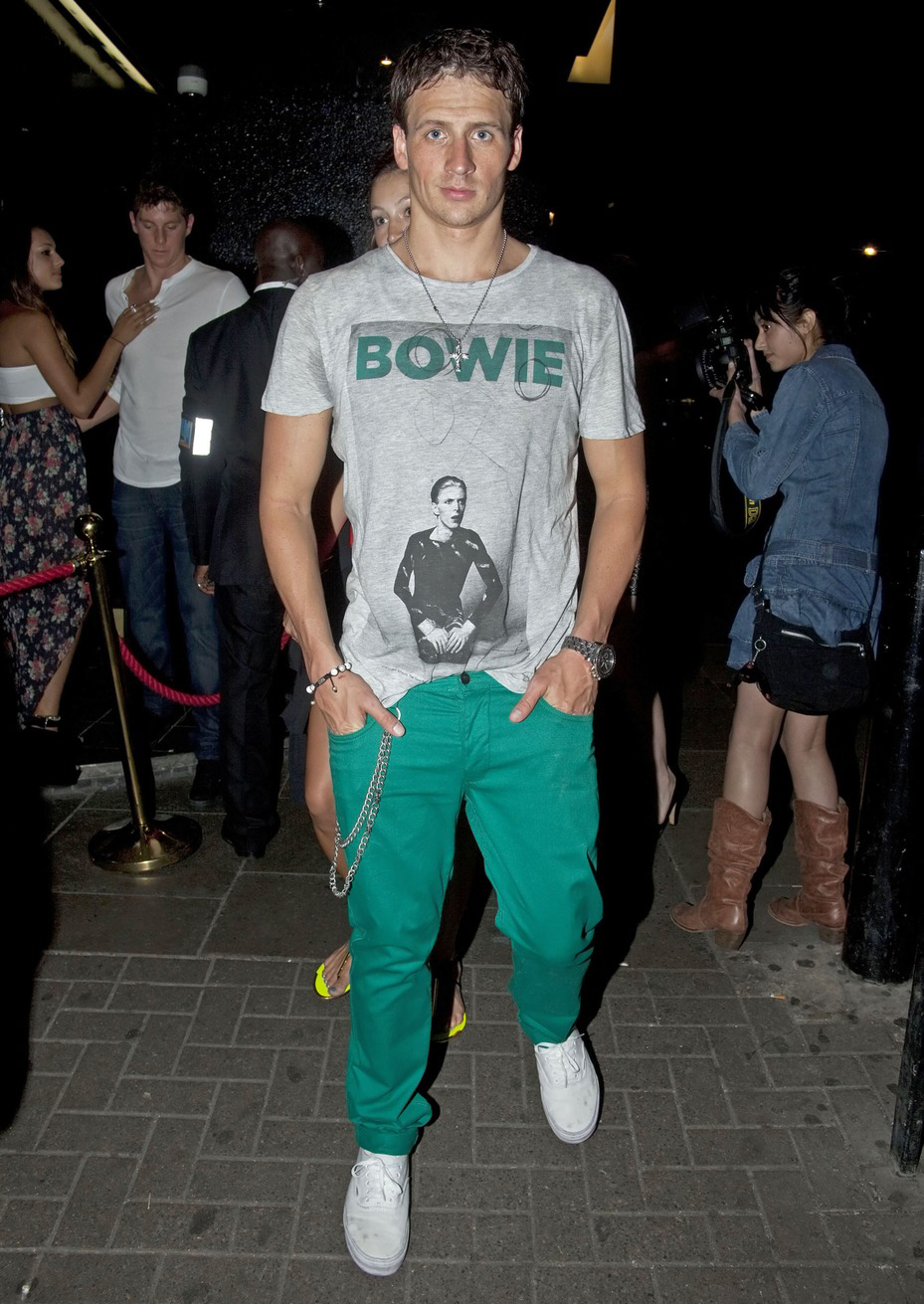
Male athletes also received special attention from the media that sometimes confused attractiveness with sexual permissiveness. Swimmer Ryan Lochte is an eleven-time medalist yet the majority of press about him this Olympics revolved around his personal and sexual life. Rumors continually swirl about his latest girlfriend(s), photos like this one pop up with Lochte out clubbing (with special attention to his sartorial choices), his mother unfortunately told the press he only has time for “one-night stands” upon repeated questioning about his dating life—thus forcing Lochte to clarify that his mother doesn’t even know what that means and that she meant he is “not in a relationship so I do go on dates”—and recently he has been courted to join Dancing with the Stars and The Bachelor. The athlete’s appearance has gained more attention than his professional success, making Lochte’s sexual life a proverbial piece of meat for the press to gnaw on. The commodification of Olympic athletes is not uncommon given the void in professional options post-games and is therefore not always bad attention for the athlete, yet Lochte’s offers and media attention are based solely on his appearance and the press’s assumption that he is a womanizer. At least Apollo Ohno’s endorsements with Subway and Nyquil don’t involve him handing out roses to beautiful but crazy women.

The problematic gender portrayals of Olympic athletes come down to what sells: womanizing guys, diva Russians, and bitchy silver medalists. They are easily packageable images of womanhood and manhood that people respond to. The question is: will we as internet users, TV watchers, and blog readers ever change our response and eventually get frustrated with these prescribed roles, demanding new portrayals of Olympians?

Sunday, July 29, 2012

Marissa Mayer: Crisis Over Motherhood and Womanhood in the 21st Century


On July 16, 2012 Marissa Mayer was named the President and CEO of Yahoo! and became both the youngest and the first pregnant CEO of a Fortune 500 company. At nearly 7 months pregnant, Mayer told Fortune, “I like to stay in the rhythm of things. My maternity leave will be a few weeks long and I'll work throughout it." Her choice to forego maternity leave caused uproar among working and stay-at-home mothers over the importance of bonding with one’s child, the pressure on women to perform as equals to their male counterparts, and Mayer’s personal parenting choice as a public figure.

While the debates have drawn attention to both the inadequacies of American policies on paid family leave and the “society-wide struggle to reconcile women’s growing power with their maternal role,” as outlined by Michelle Goldberg of the Daily Beast, it has also revealed our anxieties about biology in defining gender expectations. The bulk of the critiques are rooted in the desire to make Mayer the posterwoman for working mothers who successfully achieve the work-life balance. Her failure to fulfill the maternal role prescribed by other working mothers like Todays Mom and Mommyish has angered some feminists and mothers who think Mayer’s choice is shortsighted, a bad example for working mothers, and a slap in the face to the nurturing maternal role. The Washington Post’s Janice D’Arcy asks, “What’s the benefit of a new mom in such a high-profile position if she’s going to act like she doesn’t need maternity leave?” D’Arcy adds, “does Mayer have a responsibility to advocate for the rest of working parents?”

Given the pressure on Mayer to be a figure of a specific agenda, the anxiety over her choice to skip maternity leave is clearly based on her biological difference as a pregnant woman CEO of a Fortune 500 company. While some have resisted acknowledging the importance of Mayer’s biology, it remains the crux of the debate. Roland Martin of CNN writes in his article, “Focus on Marissa Mayer’s brain, not her pregnancy,” “Every time a woman is in position to ascend to the top post, be it in politics or business, we immediately begin to question her uterus instead of her brain.” Roland is correct to point out the problematic gendered critique of Mayer’s choice and its distraction from her intellectual merit, but his analysis is incomplete because biology was on the table when Mayer was initially praised as the first pregnant CEO of a Fortune 500 company. Mayer’s biology has been both honored and claimed irrelevant: we cannot have it both ways, and in fact it is important.

Martin’s observations tap into the longtime debate among feminists over the importance of biology. They have been divided on the role of biology in defining womanhood since the 1970s, caught between claiming whether womanhood is based on biology or if it is a social construct (see Judith Butler). In the case of Mayer, if biology doesn’t matter then the focus should shift to her intellect. If it does, the feminist lens should focus on Mayer’s choice as a mother and professional woman instead of prescribing and projecting a social role.

What harm does this debate really cause among working mothers and social roles on the whole? It is not simply the void of a role model or the struggle for better paid family leave or even the definition of the maternal role: it is the failure to respect individual women’s choices as mothers and as businesswomen. Mayer has become a caricature of an agenda composed of projections by professional male counterparts, working mothers, stay-at-home mothers, and future mothers. The placing of a woman or a group of women on a pedestal of projected norms and expectations ironically participates in part of what feminism has responded to for decades. Women should not be expected to conform to specific gender roles, social norms, or specific choices and should instead be empowered to make their own decisions and fulfill their own personal expectations for themselves.

Regardless of opinions about Mayer’s shortsightedness in skipping maternity leave, on her foregoing the opportunity to be a role model for working mothers, and her failure to use her public image to draw attention to paid family leave issues in America, Mayer is still entitled to her choice as a working woman and future mother. Given that her biology has put her in the spotlight as a pregnant woman, our 21st century progressive focus needs to shift toward Mayer’s entitlement to choose her own biological, maternal, and professional roles.

Tuesday, July 17, 2012

5 Reasons Why American Apparel’s New Ad Campaign Might Redeem a History of Problematic Advertising

 
During the week of July 4th, American Apparel debuted a new advertising campaign with “advanced” model, Jacky O’Shaughnessy. O’Shaughnessy was discovered in February of this year, launching her modeling career at age 60. The campaign deviates from its history of controversial ads that use nudity to advertise clothing and hints, if only briefly, at an advertising strategy that does not rely on the hypersexualization of homogenous female bodies. 

Here are five reasons why the campaign may redeem American Apparel’s sub par track record:


1. The campaign has fewer problematic images of women and is void of excessive side boob, visible nipples through diaphanous shirts, public hair, and ample cheeckage.
2. The ad creates positive controversy, generating awareness of various body types and ages instead of igniting frustration over hypersexualized images of similar-looking models.
3. O’Shaughnessy disrupts the classic high-fashion narrative of underage, underweight models, making room for inclusive ideals of beauty and for new standards in the industry.
4. O’Shaughnessy, whose look is much like today's Lauren Hutton, is unique because unlike Hutton, she is famous in her 60s without any past fame as a standard looking, youthful model. Her professional success is based on her current appearance, not a past aesthetic, suggesting today's beauty standards might be expanding.
5. The ads deviate from American Apparel's past advertising campaigns that seem to overcompensate for the already appealing sweatshop free, American-made trademark. These ads (sort of) do not rely on jazzing up the ethical parts of the American Apparel brand with compromising images of young women in ads like this one for pants with a topless model.

Wednesday, July 11, 2012

A Response To The Criticism of Kate Upton’s Body: Why We Need An Empowering Community of Women


On June 10th, 2012 the “pro-skinny” blog, Skinny Gossip, published a post titled, “Kate Upton Is Well Marbled” that called her “thick,” “vulgar,” and “plus-sized.” The post writes, “Huge thighs, NO waist, big fat floppy boobs, terrible body definition – she looks like a squishy brick. Is this what American women are “striving” for now? The lazy, lardy look?...Has fashion become this?”

Since the release of this article, several feminist and fashion websites have responded. Jenna Sauers of Jezebel wrote a wonderful piece that highlights the tragedy of the website’s intolerance of Upton’s body image. She writes,  “If Kate fucking Upton's thighs are not immune from public dissection, then who is? The truth is, none of us are. As long as we live in a culture that tells women that being admired and desired for the way we look is merely the normal condition of womanhood, something fundamental to our sex, it will be considered acceptable to evaluate women for their decorative value.”

Hayley Phelan at Fashionista made similar claims about the bind that contemporary women find themselves between being labeled emaciated and plus-sized: “So if Crystal Renn is too thin, and Kate Upton is too fat, then what is the “ideal”? Can models–or regular women, for that matter–ever win when it comes to weight? The answer, as it is now, is no.”

Sauers and Phelan are right: the anxiety over visual representations of women in the media and the projections made on to everyday women is undeniable and it will not go away any time soon.

What informs these distorted body image fantasies? Is it the fashion industry, which has a long history of supporting unhealthy images of women? Perhaps, but the industry is currently trying to change their tune with the recent Vogue “Health Initiative” and the new Seventeen Magazine “Body Peace Project” that came after the advocacy of a fourteen year old girl.

Is it the unrealistic expectations of heterosexual men who have impossible ideals of femininity? Maybe, but it is important to note that Upton herself reached fame on the cover of Sports Illustrated 2012 Swimsuit Edition and is on the July 2012 cover of GQ as an addition to the canon of American bombshells.

While both the high fashion world and a few chauvinistic gentlemen contribute to the warped ideal of femininity, the current social attitudes among women also, surprisingly, adds to individual women’s critiques of their bodies. Though Skinny Gossip is no poster child for sisterhood, its tip for “Thinspiration” to “pay close attention to other girl's bodies. Pick them apart — try to find faults even with the best bodies. Then apply these high standards to yourself” is, sadly, not too foreign for many women.

Upton has been a source of criticism from other women for some time now and has been portrayed as a Jezebel figure of loose morals who would fall into the category of f**k in a game of F**k, Marry, Kill. She has been rejected from high fashion as a refined lady and instead has been branded a “page 3 girl” by Victoria’s Secret’s show runner, Sophia Neophitou, a reference to the promiscuous, voluptuous women featured in England’s The Sun. In Upton’s upcoming Vogue debut, the magazine writes, “it is in fact those two deeply abbreviated swaths of fabric on which Upton's not inconsiderable fame rests, which might make you think that this Sports Illustrated cover girl, almost always photographed nearly naked, is not exactly the ideal customer for Altuzarra's cuddly coat.” In an attempt to dance around the subject of Upton’s ladylike high fashion potential, they manage to suggest she is classless and subsequently cast her out of a clique of more respectable women. As Jezebel’s Sauers observes, “As long as women are in competition with one another to have the ‘best’ body, we all lose.”

Where is the space for change and new attitudes about women’s bodies? It lies within the establishment of a strong community of women who stop silently and verbally comparing themselves to one another, commenting on other women’s clothing, and suggesting a girl “eat a sandwich.” As feminist literary critic, Elaine Showalter, writes in her groundbreaking 1981 article, “Feminist Criticism in the Wilderness,” “a theory of culture incorporates ideas about women’s body, language, and psyche but interprets them in relation to the social contexts in which they occur.” In other words, women’s understanding of their bodies and ideas of self are informed by cultural contexts. For Showalter in 1981, that context was a phallocentric—male-centered—one, yet in 2012 many women have successfully found a social space that is uniquely feminine and largely outside of patriarchy.

But these spaces still lie within a context of competition between women and they need to be reimagined in a way that allows for more acceptance of womanhood. Showalter calls the space outside of patriarchy the “wild zone” that is “the place for the revolutionary language” and “liberated desire and female authenticity.” Using Showalter’s imaginary place of womanhood, women today can aspire to create a sisterhood that accepts different body sizes and expressions of femininity. In this way, intolerance from women like the anonymous one behind Skinny Gossip will not be welcomed and acceptance of women’s bodies will span across the fashion industry, men’s communities, and sisterhood alike.

Wednesday, June 20, 2012

5 Spiritual Books & Poetry Anthologies by Women Writers

 
1. Absolute Trust in the Goodness of the Earth by Alice Walker
Walker’s poetry responds to post-9/11 emotional trauma with “less yang, far, far more yin.” Her poems imagine meditative spaces and explore native traditions of the Americas and Africa for spiritual healing in the West.
 2. Thirst by Mary Oliver
This anthology of poems, written after the death of Oliver’s life partner, has an elegiac tone as the poet encounters faith, healing, and restoration. Poems address grief, belief, and meditation, as exemplified in the poem, “Prayer.”
 3. The Stream and the Sapphire by Denise Levertov
Levertov’s collection of poems reclaims Biblical myths and figures from a feminist lens. Her poetry serves as a spiritual exercise that contemplate grace while inspiring Ignatian-like social justice.
 4. Aunt Carmen’s Book of Practical Saints by Pat Mora
Mora’s poetry acts as an extension of the rural New Mexican Catholic tradition of worshipping local saints. Her poetry-as-prayer is paired with images of wood-carved saints, aligning multiple art media with spiritual vocation.
 5. The Fifth Sacred Thing by Starhawk
Starhawk, a prominent pagan feminist who practices earth-based spirituality, explores ecological crisis, progressive love relationships, and spiritual odysseys in her famous post-apocalyptic novel.

Friday, June 15, 2012

Inspiration Board: 5 Creative Women Bloggers


For creative women, the world of blogging is an outlet, business, look book, and inspiration board. Some are mothers balancing parenthood and work from home, some are moonlighting online curators, while others are converts from the corporate to the creative. Here is a wonderfully long list of women bloggers. Meanwhile, here are Snaps! favorites:

1. WhoWhatWear Blog: A 2011 BlogLovin’ Award Winner, the blog includes features on Models Off Duty, editorials, interviews with figures from the fashion industry, and highlights from international magazines. The blog is curated by Who What Wear founders, Hillary Kerr and Katherine Power, and Le Fashion’s Jean Camp.

2. Oh Joy!: Oh Joy! Founder, Joy Deangdeelert Cho, is a graphic designer by trade whose work can be found at Anthropologie, Wedding Paper Divas, and other shops and presses. Her blog includes beautiful posts about graphic design, fashion, divine food, and crafts.

3. Design Sponge: Grace Bonney’s iconic blog features inspiring before & after shoots, DIY projects, and whimsical posts like this one on hand-carved stamps.

4. Shutterbean: This food blog’s recipes, reflections on restaurants and gastro pubs, and photography are stunning, and the design work by women designers Darling and Leah Creates is fantastic.

5. From Me To You: Photographer Jamie Beck, who created the concept of cinemagraphs with fellow photographer Kevin Burg, profiles street style, sneaks peaks at red carpets, and follows fashion week’s runways with stunning snapshots.

Thursday, June 7, 2012

Sizeism: Identifying a Prejudice


Sizeism is perhaps one of the most prevalent, unidentified prejudice for America in 2012. It is not an academic disciple like ethnic or gender studies nor has clear legal definitions for discrimination, yet it is widely present in our culture. In a recent poll on weight prejudice conducted by Yale’s Rudd Center for Food Policy and Obesity director, Rebecca Puhl, Ph.D, and Glamour magazine, men and women were asked to choose from pairs of words to assign to photographed women they had never met. The project revealed heavier women were more likely to be labeled “lazy,” “sloppy,” “giving,” and “undisciplined” than skinnier women, while thinner women were more likely described as “conceited,” “superficial,” “bitchy,” “vain,” and “controlling.”

The project reveals how much body size and shape plays into perceptions of identity, character, and even friendliness, and raises questions regarding how much people realize they participate in discrimination based on size. Dr. Ruhl observes, “weight is one of the last acceptable prejudices.” Yet weight is also one of the last unidentified sites of prejudice because people often do not recognize sizeism as discrimination.

Sizeism is complicated because it plays both social and medical roles. When 35.7% of American adults are obese, sensitivity about fat shaming can take the back burner to health concerns regarding Americans’ problems with emotional eating, portion control, and food deserts. Yet there is an important distinction between attitudes about food as health issues and attitudes about body shape as social issues.

Sizeism is slowly becoming recognized as a form of discrimination and prejudice in the media and academy. Zooey Deschanel, Sophia Rossi, and Molly McAleer’s website, HelloGiggles, has featured two articles on sizeism: one on ending fat shaming and one on ending skinny shaming. Jane Pratt and SAY Media's website, xoJane.com, has featured multiple articles like this one that identify fat shaming as intolerance. Ms. Magazine blog has also documented feminism’s future in body acceptance in articles like this one on fat activism and this one on the perpetration of negative attitudes about body image. Substantia Jones of The Adipositivity Project has created a movement for reformed social attitudes about weight, specifically “fat physicality,” by portraying images of overweight women. The Adipositivity Project promotes size acceptance in which “the hope is to widen definitions of physical beauty. Literally.”

The future of sizeism is recognizing it as a prejudice, and hopefully in doing so, attitudes about size will transform social norms of body image, health, and activism.