Showing posts with label Snap Crackle Pop Culture. Show all posts

Saturday, September 7, 2013

Taking Sage Advice from Katy Perry and her Connection with her Spirit Animal in the “Roar” Music Video


We can all learn a little something from this musical shaman. In moments of strife (like surviving a plane crash with a useless pretty boy who gets eaten by a tiger), we can all channel our spirit animals and it will all be better (i.e. paint elephant’s toes and summon toucans whenever we like). Just follow KP’s lead.

Step 1: Encounter your spirit animal

In the face of tarantulas climbing on her shoulders, KP takes a beat to do some good old introspection. She looks in that lagoon like Simba in one of the most beautiful moments in cinematic history, and she sees her spirit animal. What a moment! Even the fireflies make the shape of a tiger for some unknown reason!

Step 2: Be great, but have no clue why

KP finds herself doing some courageous and resourceful things like making spears out of stilettos and showering with elephants. It is not clear why she has this newfound greatness, but it is there. Her spirit animal is in her but she doesn’t quite know it yet.

Step 3: Recognize your spirit animal and be even greater

KP discovers some hominid cave painting that lets her know everything she needs about her spirit animal: it is a badass. So she puts on something sexy and emerges in a palm frond skirt and leopard skin crop top! She does what she wants!

Step 4: Channel it!

When KP roars at the real life tiger, the message is clear to us mortals: channel the spirit animal! Be a champion and roar! Preach!

Thanks, KP. We all learned something today.

Friday, September 6, 2013

The Subtle Allusion to Jack London’s “To Build a Fire” in "One Direction: This Is Us"


Part of me feels like an uber nerd for making a Jack London reference for this, but then I remember that Morgan Spurlock directed One Direction: This Is Us and I feel OK with it. And, appropriately, from henceforth we will call the 1D movie “the film.” It legitimizes me. For myself.

As I watched the film with my esteemed colleagues sipping boxed Sauvignon Blanc and eating red vines, I was mesmerized by the whimsy of the carefree musical geniuses from the UK (can’t forget about Niall, that Irish fool). From Liam saying he wanted to be a fireman so he could save people to the lads singing “Let Me Be Your Last Kiss-Reggae Version” to Zayn’s Bob Marley board shorts, it was nothing short of amazing. I laughed. I sang along. I heckled. (#sauvignonblanc)

And then the snob cloud shrouded me.

The lads went camping, and Louis coyly stepped out as the other four tried to assemble their tents. (I am certain some poor camera crew member had to step in and assemble the tarp tipis for them in the end.) Then all five attempted to make a fire to warm their manly bristles called facial hair and illuminate their luscious locks in the night. But they were, as it were, unable to build a fire. 

So I leaned over to my fellow film-watcher and whispered, “It’s like Jack London’s ‘To Build A Fire!’” Allow me to explain.  In the short story, we meet “the man” who falls through ice on the Yukon Trail and needs to build a fire to warm himself. In the film, we meet our five international sensations and their perfectly gelled-manes as they decide to rough it in some backyard. In the story, we see “the man" build a fire, only to have it extinguished by the melting snow falling from the branches above. In the film, we see the British gents lean some logs together and assume they will stay up on their own, but alas no. So much mirroring! Until, of course, we get to the part in London’s story when the protagonist dies of hypothermia. Spoiler alert, 1D fans, Liam, Louis, Harry, Niall, and Zayn live through the film.

So, the parallel ends there. But it was fun while it lasted.

Sunday, February 10, 2013

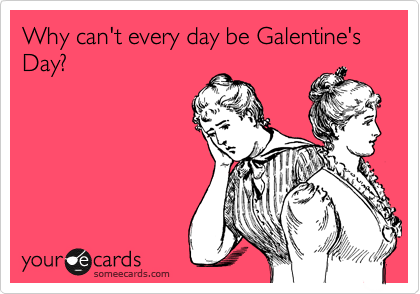
5 Things: Galentine's Day


Ladies, we celebrate! In the words of Leslie Knope, “ladies celebrate ladies” on Galentine’s Day (also known as February 13th). For further reading, click here.

There are your Galentine’s Day staples like eating frittatas and exchanging gifts likes mosaic portraits of your friends made from the crushed bottles of their favorite diet soda. But there are other ways to celebrate your lady friends being super people:

1.     A picnic (for southern hemisphere dwellers in February) with personalized paper accordion garlands made in shape of your gals’ faces
2.     Lingering celebrations at a hot dog stand exchanging amazing gifts like Lip Ringlosss Rings
3.     A classy wine bar evening at which you give your gals classy wine openers like this gem from Sky Mall
4.     Teatime with little sandwiches and macaroons giving everyone copies of Emily Post’s Etiquette, sparking conversation about Downton Abbey’s covetable dinnerware, clothes, and luggage (oh, the luggage!)
5.     A brunch event in which all members of the Galentine’s Day celebration perform slam poetry about each lady present, resulting in overall jealousy and awe at neighboring tables

Wednesday, November 28, 2012

Avoiding Commodifying Hurricane Sandy in 2012 Holiday Gift Guides: Some Tips

In the wake of Hurricane Sandy, there have been many responses to the natural disaster. Some have made too-soon (but funny) cocktails, others have donated generously, a select few are obsessively preparing for the next natural disaster, and some have moved on to holiday shopping. Then there are some who have combined a few of these responses: namely, the trend of holiday shopping for survival gear. Numerous websites and blogs have posted gift guides for disaster gear (“disaster preparedness is all the rage right now”) and while some of them are well-intended others risk capitalizing on a tragedy that many people are still experiencing. Where is the line between smart, informed, if not a little paranoid, gift guides and the commodification of a natural disaster?

Here are some helpful tips for those flirting with the idea of creating a survival gift guide to help them avoid the slippery slope of taboo:

-Avoid bombarding your guide with pet-saving gear, such as doggie life vests, portable purifying cat water fountains, etc. #RichPeopleProblems.
-Items such as water wicking pants, rain resistant jackets, and water-proof matches are not helpful when half of Manhattan has flooded. Having water bead instantly on one’s pants cannot help them when their home is destroyed.
-Do not give people compasses. Only Eagle Scouts know how to read them properly and unless you think your friends and family will find themselves in a natural disaster in the Yukon, consider an iTunes gift card as a stocking stuffer instead.
-Those flashlights that you have to crank to turn on are just not useful so stop putting them in your gift guides.

Wednesday, October 24, 2012

Elegy for Newsweek Magazine


The beginning of the end—
Or the panic that it may be the beginning of the end—
Either way we seep into melancholia over your passing into the eworld.

Eighty years young, your glossy pages never looked so youthful
Keeping yourself hip all the way to the end
With May’s Gay Obama cover that spited Time
And July’s iCrazy that foreshadowed your own demise.

But to no avail!
“We did everything we could,”
Said all the people who like the idea of print media
But read all their news online.

We will miss the good humor of Periscope
The wise words of Fareed Zakaria pre-hiccup
And the annual Year in Review.
Farewell, dear print Newsweek, we bid you adieu.

Thursday, October 18, 2012

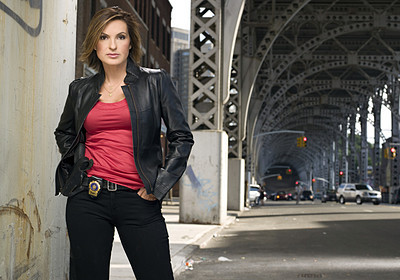
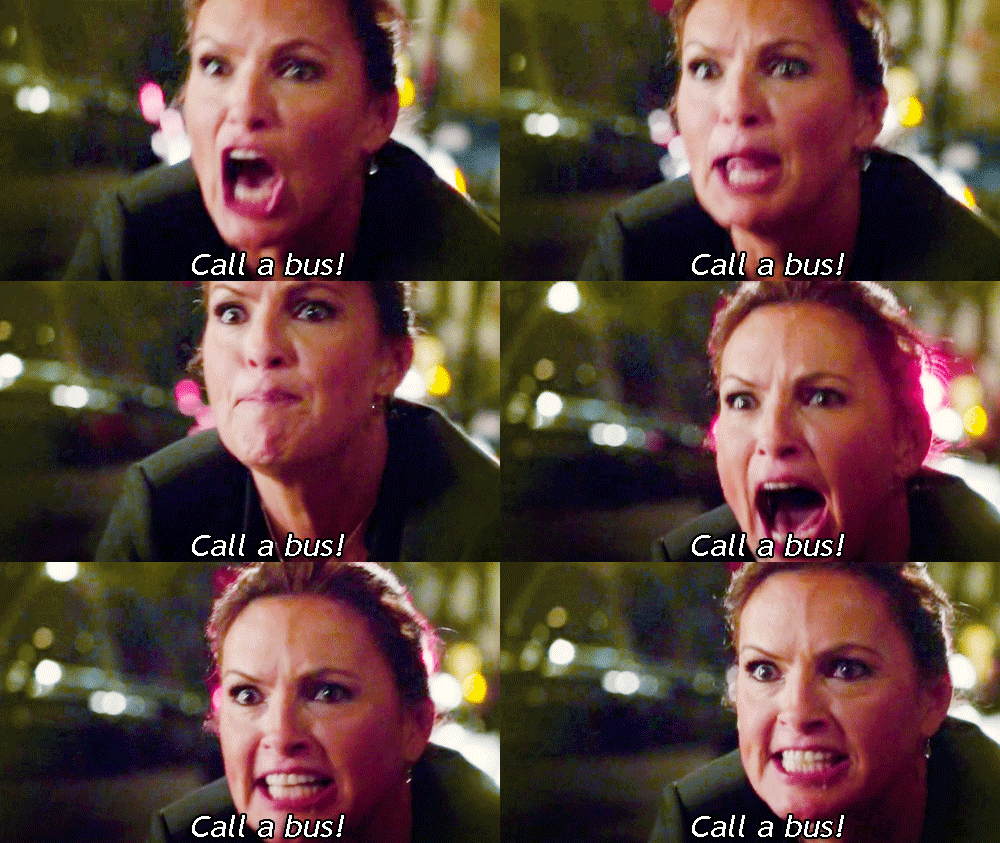
A Solution to the Debate Over Whether or Not Bond Girls Are Positive Representations of Women: Make Olivia Benson the Next Bond Girl


Skyfall is coming. The 50th anniversary of James Bond is upon us. And Adele wrote an awesome theme song that topped iTunes charts within ten hours of its release.

The new film and the coinciding anniversary has inspired some debate over the figure of the Bond Girl and whether or not she is an image of women’s empowerment. In one camp, we witness that Ian Fleming was considered “more sexist than some,” the damsel-in-distress narrative in the series too-often repeated, and the over-played association between Bond Girls and their appearance. Just the term “Bond Girl” leaves a funky taste, inspiring some to ponder “why not Bond Woman?” Yet some argue that the Bond Girl also evokes an image of strength, sexual freedom, and independence, particularly in modern incarnations like the “masculine” clothes-wearing Vesper Lynd of Casino Royale and the physically powerful Camille Montes of Quantum of Solace. The choice to cast M as a woman—Dame Judi Dench, no less—is a major achievement for representations of women.

So on the one hand, Bond Girls are dated, moving picture Barbies. On the other hand, Bond Girls are globe-trotting, sexually satisfied ladies. What to do, what to do…

On the proverbial third hand, there is another solution to the current disagreement over the feminist or anti-feminist role Bond Girls have: make Olivia Benson the next Bond Girl.

Let us illustrate this using some word association:

Olivia Benson—Law & Order SVU—Stabler—love plot—no, just professional coworkers!—back to coworkers—Ice-T—knows what “sex on the downlow is”—Olivia is sexy—but not too sexy that we forget she’s a cop—back to sexy—chooses work appropriate shoes over implausible heels—heels—goes on dates all dressed up but often ends them early for work—work—single working woman—sounds familiar to many ladies—familiar—caring—she genuinely cares about her cases—heroic—heroine.

Let’s put this in a Bond-speak analogy:

Old Bond Girl: “My name is [insert ridiculous vagina slang name]” :: Olivia Benson: “let’s nail this sonofabitch.”

Benson is the heroine of her story. There is no debate over whether or not she is the sexual conquest who fires a shot or two or the smart, empowered woman of the world who gets to sleep with Daniel Craig. Debate settled.

DUN DUN.

Tuesday, September 25, 2012

5 Reasons Why Lady Gaga’s “Body Revolution 2013” Matters


Today Lady Gaga launched a response to the fuss over her recent weight gain. She recently acknowledged she gained around 25 lbs. but has made some conflicting comments about her attitude about her body in the past few months, sending mixed signals about body image acceptance for those who follow the mantra “Born This Way.” In April, she Tweeted: “Just killed back to back spin classes. Eating a salad dreaming of a cheeseburger #PopSingersDontEat #IWasBornThisWay” while this month she responded to the commentary about her weight gain with, “I really don’t feel bad about it, not even for a second.”

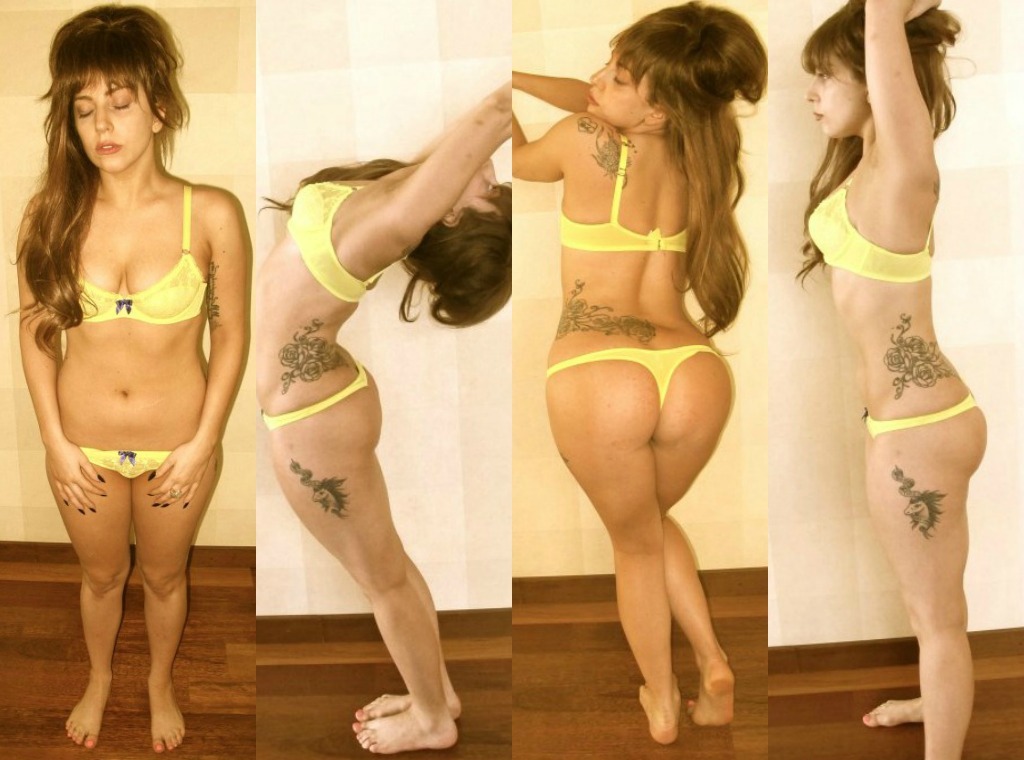
But today Lady Gaga set the record straight by announcing a “Body Revolution 2013” on LittleMonsters.com. She revealed her personal battle with anorexia and bulimia since 15 in a caption to a series of unretouched photographs of herself in underwear. She wrote:

“But today I join the BODY REVOLUTION.
To Inspire Bravery.
and BREED some m$therf*cking COMPASSION”

Lady Gaga also Tweeted naked photo of herself today, honoring her body in spite of the recent press about her weight gain, and announced call to action on Facebook.

Here are 5 reasons why Lady Gaga’s “Body Revolution 2013” matters:

1.     Lady Gaga is actively confronting the prevalence of fat-shaming prejudices in our culture as represented by the media. Her photographs on Twitter and LittleMonsters.com provoke rethinking of “fat,” “fat shaming,” and ultimately body image in general. Lady Gaga is using her celebrity to not only reveal a prejudice but to create a call to action.
2.     “Body Revolution 2013” reiterates the affirmation, “Born This Way,” in the context of body image and self-love. As Dodai Stewart observes in Jezebel’s breakdown of Gaga’s “embodying bravery”, “By posting these homemade, raw, here-I-am-with-all-my-flaws (not that we see any) images, she shows that her struggle is the same struggle millions of other men and women have everyday: Learning to love yourself just the way you are, finding and believing you are beautiful when the media is hellbent on making you think you're fat and ugly (and that fat is the same as ugly).”
3.     It made Terry Richardson, who isn’t always the poster child of positive portrayals of women, speak up. Richardson defended Gaga and, whether he meant to or not, defended the acceptance of bodies by posting “Lady Gaga Unretouched #1” on his online diary.
4.     The portraits from LittleMonsters.com acknowledge the body beyond its aesthetics by celebrating physical ability. In one photo, Lady Gaga is in the yoga pose, Anyvittasana, or Standing Backbend, honoring her body in physical practice.
5.     Today’s announcement creates awareness about eating disorders because Gaga gives voice to the realities of anorexia and bulimia. Lady Gaga gives a face to this often typified reality with her self-portraits in her underwear, and the juxtaposition between the distorted, unflattering photos of her in Amsterdam and her personal photos suggest that society’s warped perceptions of beauty have in part been caused and perpetrated by the media that recently fat-shamed the singer.

Wednesday, September 5, 2012

Nina Simone’s Upcoming Biopic: Negotiating Between the Representation and the Legacy

 
Nina Simone, the Jazz singer, songwriter, pianist, civil rights activist, and High Priestess of Soul is about to be honored in a biopic staring Zoe Saldana. Not everyone is happy about it.

The biopic is unauthorized by Simone’s estate and is heavily criticized by the singer’s daughter Lisa Celeste Stroud, who goes by the stage name, Simone, for biographical and casting reasons. The choice to cast Saldana has caused the most controversy around the film because of Saldana’s lack of resemblance to Simone, which is significant because the singer was discriminated against and told she would not be successful because of her appearance. According to the singer’s daughter “As a child, my mother was told her nose was too big and she was too dark.” Saldana does not share those physical attributes, thus she would not illustrate the aesthetic that Simone was prejudiced against for, and Stroud would prefer “women with beautiful, luscious lips and wide noses and who know their craft” to portray her mother accurately.

More criticism of the film arose around the portrayal of a love plot between Nina Simone and her manager, Clifton Henderson, in the film. According to Stroud, “Clifton Henderson was gay. He was not attracted to women. So, the truth is…Nina Simone and Clifton Henderson NEVER had a relationship other than a business one.” Further criticism of Simone’s dark side has arisen over the concern that it will be either glossed over as a mere lapse in judgment or as an incriminating part of Simone’s character. Either way, it could oversimplify what Stroud doesn’t want compressed: that “the whole arc of her life which is inspirational, educational, entertaining and downright shocking at times is what needs to be told THE RIGHT WAY.”

The controversy over Nina Simone’s upcoming biopic illuminates more than the importance of biographic accuracy and the casting of lead roles: it also highlights the importance of not wrapping up a person’s life in a pretty little bow within the biopic genre. As Landon Palmer writes on the limitations of biopics, “the biopic traditionally, in a strange way, positions itself as ‘the last word’ on its subject’s life, as the final negotiation between the public and private persona.” The biopic must negotiate between representation and oversimplification, which is a hard balance to maintain especially for legendary figures that tempt directors to either live up to the figure’s hype or deconstruct the perfection of celebrity, both resulting in typifying the real person.

Solvej Schou writes in Entertainment Weekly, “How do you recreate or reinterpret that, the breath of a musician’s life, their art, as a biopic, on film?” The answer is, clearly, with difficulty.

In the case of Simone, her biographical history is important insofar as it tells a story of race, from the issue of her aesthetics to her rejection from the Curtis Institute for what she believed was racism, and of musical influence, from Simone’s popularization of “I Loves You Porgy” to her reappopriation of Bob Dylan’s “I Shall Be Released,” to name a few landmarks. Simone’s legend is equally important to keep in tact, perhaps best in memory instead of representation, as what she called the “mass hypnosis” of her audience was famously commanding, consuming, and mystical in a way unique to Simone.

What is important for Simone’s biopic, like any other, is to not typify her life or categorize her legacy. A biopic should represent a person’s life without glamorizing or simplifying the biography, and it should illuminate what makes the central figure revolutionary. Perhaps most important for the biopic, however, it that it should maintain some of the mystery—the allure—of the legend. As Stroud notes, “Nina Simone was a voice for her people and she spoke out HONESTLY, sang to us FROM HER SOUL, shared her joy, pain, anger and intelligence poetically in a style all her own.” 

Monday, August 27, 2012

“Legitimate Rape” and Our Culture’s Confusing Messages About Rape and Sexual Violence


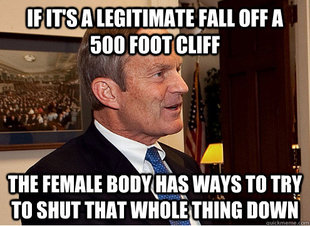
The most recent “oops” from men on women’s biology and reproductive rights comes to us from Todd Akin, Republican Congressman from Missouri. He told a St. Louis television station that there is, apparently, such a thing as “legitimate rape” and that when it happens, women do not get pregnant because, evidently, their lady bits turn off in order to prevent conception. Akin explains, “If it’s a legitimate rape, the female body has ways to try to shut the whole thing down.” Apparently, abortion can be regulated based on “legitimacy” of the sexual act that led to conception. This made some people angry.

Aside from Akin’s horrifyingly inaccurate biology knowledge, which Democratic Senator from Missouri, Claire McCaskill, called “ beyond comprehension that someone can be so ignorant about the emotional and physical trauma brought on by rape,” his innuendos about legitimacy and validity in rape is destructive and, unfortunately, not an uncommon offense in the past few months.

Akin is one of many contemporary male politicians who have made problematic public remarks about rape and sexual abuse that misinform the public on social norms, legality, and gender relations and also reinforces a culture of victim blaming. On August 20th, former Republican governor of Arkansas Mike Huckabee used the phrase, “forcible” rape, suggesting that rape is not always forced on women as violations or abuse. In the UK, Justice Secretary, Kenneth Clarke claimed “date rape” was less “serious” than other attacks and George Galloway, the Respect MP, played down the sex crime allegations against Julian Assange. In 2011, Roger Helmer made a distinction between “classic stranger rape” and “date rape,” writing on his blog, “rape is always wrong, but not always equally culpable.” As Louise Mensch of The Telegraph writes, “Rape is having a moment. And not in a good way… from the Left and the Right, male politicians and two-bit “public figures” have made common cause on rape. Not to condemn it, or to pledge tougher action in policing it; but to minimize and dismiss it as a crime.”

The current trend of misinformed and judgmental conversation about rape and sexual abuse in politics is complicated by the mixed signals about healthy sexual relationships in pop culture because both risk misinforming people about sexual violence. The rise of S&M literature that romanticizes sexual dominance, vampire fantasies with violent sexual themes, and music that glamorizes aggressive sexuality only feeds the flame of considering some acts of sexual violence more acceptable than others. The Fifty Shades of Grey series is empowering for many men and women, but it also sends confusing signals about healthy relationship dynamics and power hegemonies between couples. The vampire craze offers a mystical love plot but also confusingly mingles sexual and violent interactions, and recent Top 40 songs have popularized themes of rape and sexual dominance, notably Rihanna’s “S&M” (“Now the pain is my pleasure”) and Katy Perry and Kanye West’s “E.T.” (“Take me, take me / Wanna be a victim / Ready for abduction”). While these trends have promoted acceptance of diverse sexualities, they also risk blurring the line between consent and rape. Clearly there should not be a prescribed “normal” sexuality, but our society needs to make it clear that rape is never “illegitimate,” regardless of sexual preferences.

Without dismissing diversity in sexuality, politicians and the media need to send a clearer message about what sexual violence is, how to recognize it, and how to react to it. Establishing a clear definition of rape and abuse does not conflict with acknowledging sexual diversity and these public spheres need to be responsible for communicating that distinction so that our culture does not become complacent or ignorant of violence.

Tuesday, August 14, 2012

Competitiveness Confused With Being a Diva and Not Being “Impressed,” and The Commodification of Hot Athletes: What The Olympics Reveal About Our Gender Biases


The 2012 Olympics in London has included many triumphant moments for international athletes beyond the podium. Male athletes enjoyed landmark events such as Michael Phelps’ record number of Olympic medals and double amputee Oscar “Blade Runner” Pistorius’s competition in the 4x400. Female athletes also experienced history-making achievements from the first-ever inclusion of women’s boxing (see this interview from WBEZ’s “The Afternoon Shift” on the documentary, “Go For It: Life Lessons From Girl Boxers”) to the praise of Misty May-Treanor and Kerri Walsh for their third gold in women’s beach volleyball to US Olympic gymnast, Gaby Douglas’, mature response to criticism of her hair. Yet amid these achievements were also events that were evidence of lingering biases against competitive women and single, successful men, revealing problematic social norms for both genders.

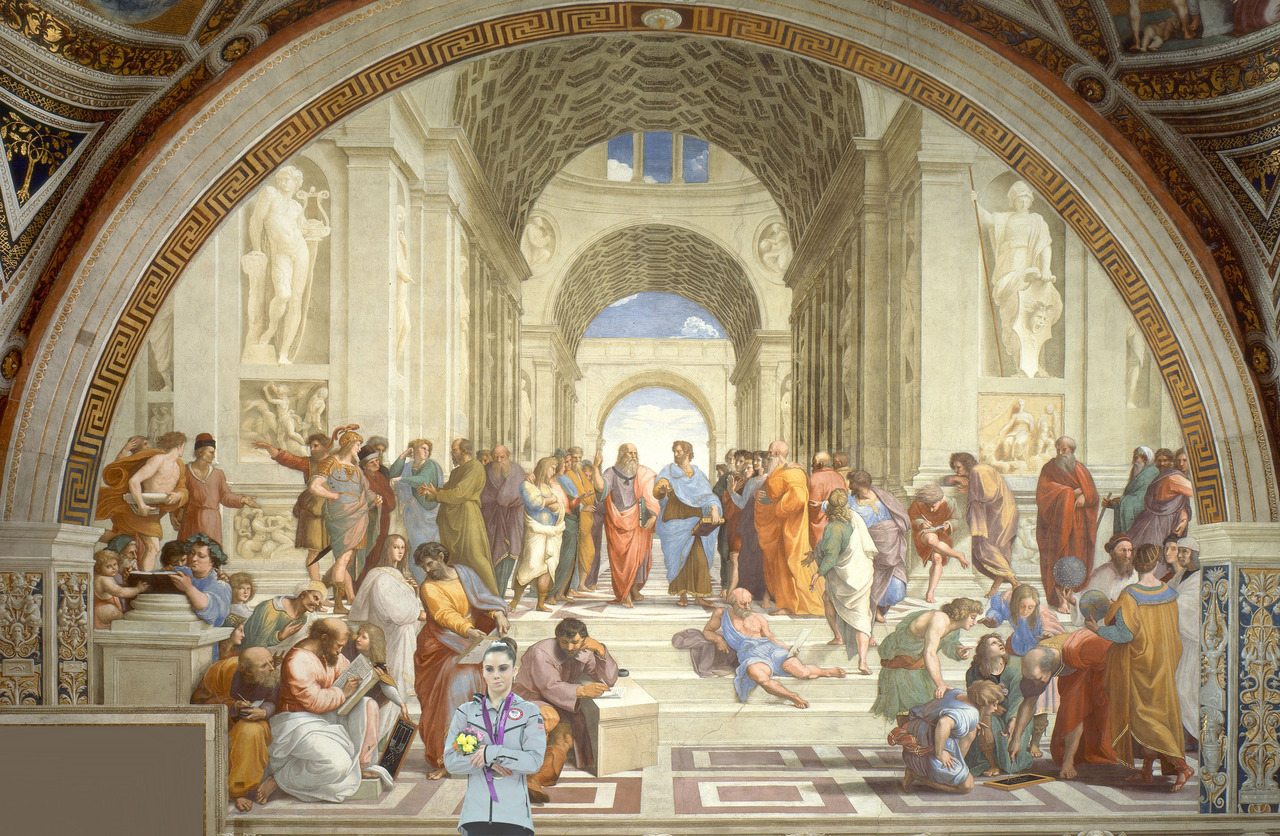
The McKayla is Not Impressed meme has become one of the m buzzed about and visited memes since its inception on August 7th, 2012. The meme features American gymnast, McKayla Maroney’s, face after not winning gold in the women’s vault photo shopped into scenes like the an image of the Taj Mahal, the White House cabinet getting briefed on Osama bin Laden’s death, and the birth of Jesus. Some of the memes are witty commentaries like Mitt Romney’s VP choice or jabs at Justin Bieber, yet others like Maroney’s supposed lack of amusement at the Pyramids and Paralympics athletes competing suggest that she is simply a bitch with a bad attitude. The meme’s playfulness with Maroneys frustration over not winning gold risks interpreting her drive and competitiveness with being bitchy and ungrateful. Why is this female Olympian’s expression after losing first place synonymous with not being “impressed” with anything else in the world? Is this a gender-based meme that confuses competitiveness and disappointment with being a prima dona?

Similarly, the NBC coverage of the Russian Olympic women’s gymnastics team included the gender-biased word choice, “diva,” in describing the Olympians’ training styles and relationship with their coach. Dvora Meyers' Jezebel article on NBC commentators’ poor word choice draws attention to the problematic association between women’s motivation, focus, and training style with “truly negative, un-sportswoman like behavior” characteristic of a diva.

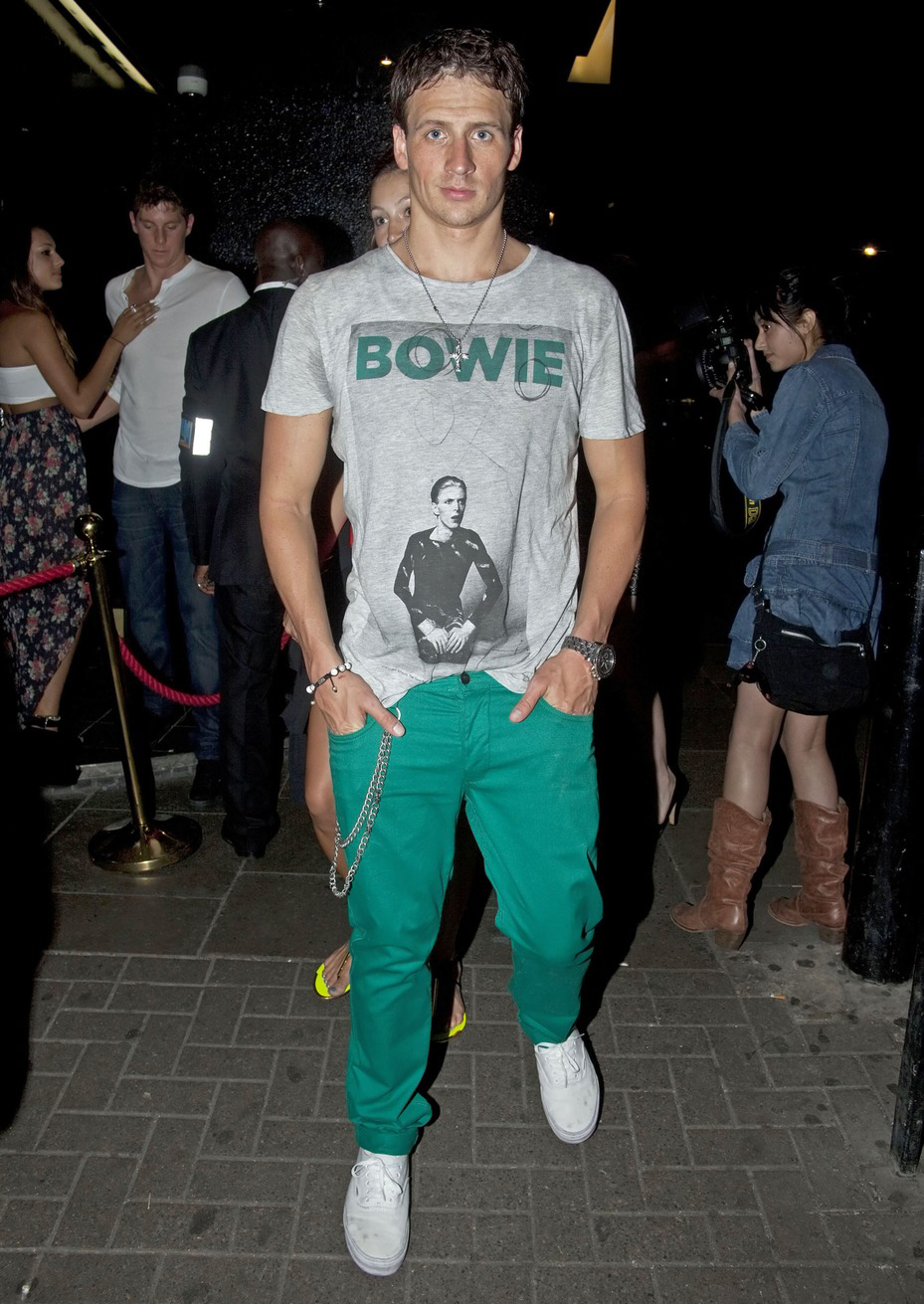
Male athletes also received special attention from the media that sometimes confused attractiveness with sexual permissiveness. Swimmer Ryan Lochte is an eleven-time medalist yet the majority of press about him this Olympics revolved around his personal and sexual life. Rumors continually swirl about his latest girlfriend(s), photos like this one pop up with Lochte out clubbing (with special attention to his sartorial choices), his mother unfortunately told the press he only has time for “one-night stands” upon repeated questioning about his dating life—thus forcing Lochte to clarify that his mother doesn’t even know what that means and that she meant he is “not in a relationship so I do go on dates”—and recently he has been courted to join Dancing with the Stars and The Bachelor. The athlete’s appearance has gained more attention than his professional success, making Lochte’s sexual life a proverbial piece of meat for the press to gnaw on. The commodification of Olympic athletes is not uncommon given the void in professional options post-games and is therefore not always bad attention for the athlete, yet Lochte’s offers and media attention are based solely on his appearance and the press’s assumption that he is a womanizer. At least Apollo Ohno’s endorsements with Subway and Nyquil don’t involve him handing out roses to beautiful but crazy women.

The problematic gender portrayals of Olympic athletes come down to what sells: womanizing guys, diva Russians, and bitchy silver medalists. They are easily packageable images of womanhood and manhood that people respond to. The question is: will we as internet users, TV watchers, and blog readers ever change our response and eventually get frustrated with these prescribed roles, demanding new portrayals of Olympians?

Tuesday, July 17, 2012

5 Reasons Why American Apparel’s New Ad Campaign Might Redeem a History of Problematic Advertising

 
During the week of July 4th, American Apparel debuted a new advertising campaign with “advanced” model, Jacky O’Shaughnessy. O’Shaughnessy was discovered in February of this year, launching her modeling career at age 60. The campaign deviates from its history of controversial ads that use nudity to advertise clothing and hints, if only briefly, at an advertising strategy that does not rely on the hypersexualization of homogenous female bodies. 

Here are five reasons why the campaign may redeem American Apparel’s sub par track record:


1. The campaign has fewer problematic images of women and is void of excessive side boob, visible nipples through diaphanous shirts, public hair, and ample cheeckage.
2. The ad creates positive controversy, generating awareness of various body types and ages instead of igniting frustration over hypersexualized images of similar-looking models.
3. O’Shaughnessy disrupts the classic high-fashion narrative of underage, underweight models, making room for inclusive ideals of beauty and for new standards in the industry.
4. O’Shaughnessy, whose look is much like today's Lauren Hutton, is unique because unlike Hutton, she is famous in her 60s without any past fame as a standard looking, youthful model. Her professional success is based on her current appearance, not a past aesthetic, suggesting today's beauty standards might be expanding.
5. The ads deviate from American Apparel's past advertising campaigns that seem to overcompensate for the already appealing sweatshop free, American-made trademark. These ads (sort of) do not rely on jazzing up the ethical parts of the American Apparel brand with compromising images of young women in ads like this one for pants with a topless model.

Wednesday, July 11, 2012

A Response To The Criticism of Kate Upton’s Body: Why We Need An Empowering Community of Women


On June 10th, 2012 the “pro-skinny” blog, Skinny Gossip, published a post titled, “Kate Upton Is Well Marbled” that called her “thick,” “vulgar,” and “plus-sized.” The post writes, “Huge thighs, NO waist, big fat floppy boobs, terrible body definition – she looks like a squishy brick. Is this what American women are “striving” for now? The lazy, lardy look?...Has fashion become this?”

Since the release of this article, several feminist and fashion websites have responded. Jenna Sauers of Jezebel wrote a wonderful piece that highlights the tragedy of the website’s intolerance of Upton’s body image. She writes,  “If Kate fucking Upton's thighs are not immune from public dissection, then who is? The truth is, none of us are. As long as we live in a culture that tells women that being admired and desired for the way we look is merely the normal condition of womanhood, something fundamental to our sex, it will be considered acceptable to evaluate women for their decorative value.”

Hayley Phelan at Fashionista made similar claims about the bind that contemporary women find themselves between being labeled emaciated and plus-sized: “So if Crystal Renn is too thin, and Kate Upton is too fat, then what is the “ideal”? Can models–or regular women, for that matter–ever win when it comes to weight? The answer, as it is now, is no.”

Sauers and Phelan are right: the anxiety over visual representations of women in the media and the projections made on to everyday women is undeniable and it will not go away any time soon.

What informs these distorted body image fantasies? Is it the fashion industry, which has a long history of supporting unhealthy images of women? Perhaps, but the industry is currently trying to change their tune with the recent Vogue “Health Initiative” and the new Seventeen Magazine “Body Peace Project” that came after the advocacy of a fourteen year old girl.

Is it the unrealistic expectations of heterosexual men who have impossible ideals of femininity? Maybe, but it is important to note that Upton herself reached fame on the cover of Sports Illustrated 2012 Swimsuit Edition and is on the July 2012 cover of GQ as an addition to the canon of American bombshells.

While both the high fashion world and a few chauvinistic gentlemen contribute to the warped ideal of femininity, the current social attitudes among women also, surprisingly, adds to individual women’s critiques of their bodies. Though Skinny Gossip is no poster child for sisterhood, its tip for “Thinspiration” to “pay close attention to other girl's bodies. Pick them apart — try to find faults even with the best bodies. Then apply these high standards to yourself” is, sadly, not too foreign for many women.

Upton has been a source of criticism from other women for some time now and has been portrayed as a Jezebel figure of loose morals who would fall into the category of f**k in a game of F**k, Marry, Kill. She has been rejected from high fashion as a refined lady and instead has been branded a “page 3 girl” by Victoria’s Secret’s show runner, Sophia Neophitou, a reference to the promiscuous, voluptuous women featured in England’s The Sun. In Upton’s upcoming Vogue debut, the magazine writes, “it is in fact those two deeply abbreviated swaths of fabric on which Upton's not inconsiderable fame rests, which might make you think that this Sports Illustrated cover girl, almost always photographed nearly naked, is not exactly the ideal customer for Altuzarra's cuddly coat.” In an attempt to dance around the subject of Upton’s ladylike high fashion potential, they manage to suggest she is classless and subsequently cast her out of a clique of more respectable women. As Jezebel’s Sauers observes, “As long as women are in competition with one another to have the ‘best’ body, we all lose.”

Where is the space for change and new attitudes about women’s bodies? It lies within the establishment of a strong community of women who stop silently and verbally comparing themselves to one another, commenting on other women’s clothing, and suggesting a girl “eat a sandwich.” As feminist literary critic, Elaine Showalter, writes in her groundbreaking 1981 article, “Feminist Criticism in the Wilderness,” “a theory of culture incorporates ideas about women’s body, language, and psyche but interprets them in relation to the social contexts in which they occur.” In other words, women’s understanding of their bodies and ideas of self are informed by cultural contexts. For Showalter in 1981, that context was a phallocentric—male-centered—one, yet in 2012 many women have successfully found a social space that is uniquely feminine and largely outside of patriarchy.

But these spaces still lie within a context of competition between women and they need to be reimagined in a way that allows for more acceptance of womanhood. Showalter calls the space outside of patriarchy the “wild zone” that is “the place for the revolutionary language” and “liberated desire and female authenticity.” Using Showalter’s imaginary place of womanhood, women today can aspire to create a sisterhood that accepts different body sizes and expressions of femininity. In this way, intolerance from women like the anonymous one behind Skinny Gossip will not be welcomed and acceptance of women’s bodies will span across the fashion industry, men’s communities, and sisterhood alike.

Thursday, June 28, 2012

Spotlight: Media That Matters Film Festival


Each June, Media That Matters Film Festival debuts a collection of twelve shorts under twelve minutes. The festival is one of the first and largest online film festivals and uses independent media to inspire civic engagement. In its eleventh year, the festival debuted films about female firefighters in Burning Barriers, a low-income dancer from Oakland in Sick Wid It, a call to action to prevent infant deaths in India in It’s In Your Hands, and nine others.

The festival has had other popular films, including 2006’s Something Other Than Other about a multiracial couple’s reflections on their youth and hopes for a future in which their son is able to check a box for his race other than “other.” The Media That Matters’ most famous films include AGirl Like Me, which was made by a sixteen year old girl in Harlem and draws attention to problematic beauty standards for African American girls, and World on Fire with Sarah McLachlan that compares the cost of a media set in LA with that of international aid from bicycle ambulances in Nepal to West African educational film screenings for refugees.

What is unique about the Media That Matters Festival is that it provides justice-based content that is immediately and publicly available. This interview with Katy Chevigny, founder of the organization behind the festival, Arts Engine, sheds light on the impact of short films that are available online plus their reception in the art and nonprofit communities. The festival actively manifests its mission to “engage diverse audiences and inspire them to take action” because it is available to anyone with access to the internet. Chevigny points out that while the festival does not inhabit a physical space, it is constantly in flux and is engaged with external audiences online as well as the internal community of filmmakers.

Take a look at this year’s twelve films here.

Wednesday, June 27, 2012

Pride 2012: Transgender Awareness in Pop Culture

 
Pride 2012 was celebrated around the world this weekend from Chicago, where there was a record number of crowds with an estimated 850,000 people, to Thessaloniki, Greece, where they celebrated their first pride with 2,000 attendants. The LGBTQA community has seen progress this year—notably President Obama’s endorsement for gay marriageand is continuing its work for equality.

This past year has witnessed the rise of transgender figures in pop culture, thus honoring testimonials, inviting activism, and giving voice a still too often silenced community.

Glee’s new character, Unique, a.k.a. Wade Adams, made her premier performing Boogie Nights as a transgender woman. The Gay and Lesbian Alliance Against Defamation, GLAAD's, article on the Fox show's new character highlights the importance of Unique’s self-identification as a woman, not a gay man, distinguishing her from her gay peer, Kurt Hummel, and promoting transgender awareness.

Cher’s son, Chaz Bono, who publicly announced the beginning of his transformation in 2009, has been a key figure in pop culture and in the LGBTQA community this year. Bono was awarded the outstanding documentary prize and Stephen F. Kolzak Award at the 2012 GLAAD Awards for his documentary, "Becoming Chaz,” and rumor has it he will star in an upcoming dating show.

Jenna Talackova, Miss Canada 2012, was disqualified from the Miss Universe competition in March because she was not “naturally born” a woman. Yet thanks to Talackova’s fighting back and the international support she inspired, the Miss Universe beauty pageant will now allow transgender women to participate. Critics and activists praise the move as an inclusive step for transgender women worldwide in pop culture, sports, politics, and the workplace.

Laura Jane Grace, formerly Tommy Gabel and Against Me! founding member, publicly announced his transition to being a woman earlier this year. Check out this amazing Rolling Stone article that follows Laura as she begins her transition. It sheds light on the lived experience of a person undergoing transition, explaining: “For as long as he can remember, Gabel has lived with a condition known as gender dysphoria. As the textbooks explain it, it's a feeling of intense dissatisfaction and disconnect from the gender you were assigned at birth. As Gabel explains it, "The cliché is that you're a woman trapped in a man's body, but it's not that simple. It's a feeling of detachment from your body and from yourself.”

Friday, June 15, 2012

The GAP and JCPenney: Disrupting Heteronormativity in Advertising


The recent JCPenney ads for Mother’s and Father’s Day and the new GAP ads that feature same-sex couples and parents have caused controversy, primarily from the conservative group, One Million Moms. Their response, fueled by anger over JCPenney’s hiring Ellen Degeneres as a spokesperson, claimed that including gay individuals and couples in advertising violated religious values. Their reaction included the following statement: "We must remain diligent and stand up for Biblical values and truth. Scripture says multiple times that homosexuality is wrong, and God will not tolerate this sinful nature."

The controversy over the ad campaigns do more than reveal homophobia and disagreements on definitions of values (see Ellen Degeneres’ response to the criticism): they disrupt the pattern of heteronormativity in advertising.

Heteronormativity is the social bias that assumes opposite-sex coupling is the norm. Our culture is heteronormative on a global level and is structured around the expectation that heterosexuality is the standard. For instance, individuals are never expected to come out of the closet as straight, only gay, because heterosexuality is assumed as the norm. Being gay, therefore, is a deviation from being straight, a term that implies a standard model. Advertising reflects this standard: erectile dysfunction ads never depict two men, Father’s Day and Mother’s Day ads (until now) have not portrayed same-sex parents, insurance and home security ads feature nostalgic montages of opposite sex couples and their families, and Valentine’s Day jewelry ads always depict a male gift giver and a female receiver.

GAP and JCPenney’s inclusive ad campaigns deconstruct heteronormative marketing by including same-sex couples and representing the unacknowledged LGBTQ partner, parent, and shopper. While some have criticized the companies for displacing advocacy with marketing, their choice to portray and therefore recognize gay individuals, couples, and families is nevertheless significant in disrupting systems of heteronormative dominance and standards.

Thursday, June 7, 2012

Sizeism: Identifying a Prejudice


Sizeism is perhaps one of the most prevalent, unidentified prejudice for America in 2012. It is not an academic disciple like ethnic or gender studies nor has clear legal definitions for discrimination, yet it is widely present in our culture. In a recent poll on weight prejudice conducted by Yale’s Rudd Center for Food Policy and Obesity director, Rebecca Puhl, Ph.D, and Glamour magazine, men and women were asked to choose from pairs of words to assign to photographed women they had never met. The project revealed heavier women were more likely to be labeled “lazy,” “sloppy,” “giving,” and “undisciplined” than skinnier women, while thinner women were more likely described as “conceited,” “superficial,” “bitchy,” “vain,” and “controlling.”

The project reveals how much body size and shape plays into perceptions of identity, character, and even friendliness, and raises questions regarding how much people realize they participate in discrimination based on size. Dr. Ruhl observes, “weight is one of the last acceptable prejudices.” Yet weight is also one of the last unidentified sites of prejudice because people often do not recognize sizeism as discrimination.

Sizeism is complicated because it plays both social and medical roles. When 35.7% of American adults are obese, sensitivity about fat shaming can take the back burner to health concerns regarding Americans’ problems with emotional eating, portion control, and food deserts. Yet there is an important distinction between attitudes about food as health issues and attitudes about body shape as social issues.

Sizeism is slowly becoming recognized as a form of discrimination and prejudice in the media and academy. Zooey Deschanel, Sophia Rossi, and Molly McAleer’s website, HelloGiggles, has featured two articles on sizeism: one on ending fat shaming and one on ending skinny shaming. Jane Pratt and SAY Media's website, xoJane.com, has featured multiple articles like this one that identify fat shaming as intolerance. Ms. Magazine blog has also documented feminism’s future in body acceptance in articles like this one on fat activism and this one on the perpetration of negative attitudes about body image. Substantia Jones of The Adipositivity Project has created a movement for reformed social attitudes about weight, specifically “fat physicality,” by portraying images of overweight women. The Adipositivity Project promotes size acceptance in which “the hope is to widen definitions of physical beauty. Literally.”

The future of sizeism is recognizing it as a prejudice, and hopefully in doing so, attitudes about size will transform social norms of body image, health, and activism.