Thursday, October 18, 2012

A Solution to the Debate Over Whether or Not Bond Girls Are Positive Representations of Women: Make Olivia Benson the Next Bond Girl


Skyfall is coming. The 50th anniversary of James Bond is upon us. And Adele wrote an awesome theme song that topped iTunes charts within ten hours of its release.

The new film and the coinciding anniversary has inspired some debate over the figure of the Bond Girl and whether or not she is an image of women’s empowerment. In one camp, we witness that Ian Fleming was considered “more sexist than some,” the damsel-in-distress narrative in the series too-often repeated, and the over-played association between Bond Girls and their appearance. Just the term “Bond Girl” leaves a funky taste, inspiring some to ponder “why not Bond Woman?” Yet some argue that the Bond Girl also evokes an image of strength, sexual freedom, and independence, particularly in modern incarnations like the “masculine” clothes-wearing Vesper Lynd of Casino Royale and the physically powerful Camille Montes of Quantum of Solace. The choice to cast M as a woman—Dame Judi Dench, no less—is a major achievement for representations of women.

So on the one hand, Bond Girls are dated, moving picture Barbies. On the other hand, Bond Girls are globe-trotting, sexually satisfied ladies. What to do, what to do…

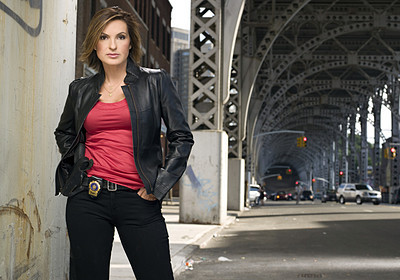
On the proverbial third hand, there is another solution to the current disagreement over the feminist or anti-feminist role Bond Girls have: make Olivia Benson the next Bond Girl.

Let us illustrate this using some word association:

Olivia Benson—Law & Order SVU—Stabler—love plot—no, just professional coworkers!—back to coworkers—Ice-T—knows what “sex on the downlow is”—Olivia is sexy—but not too sexy that we forget she’s a cop—back to sexy—chooses work appropriate shoes over implausible heels—heels—goes on dates all dressed up but often ends them early for work—work—single working woman—sounds familiar to many ladies—familiar—caring—she genuinely cares about her cases—heroic—heroine.

Let’s put this in a Bond-speak analogy:

Old Bond Girl: “My name is [insert ridiculous vagina slang name]” :: Olivia Benson: “let’s nail this sonofabitch.”

Benson is the heroine of her story. There is no debate over whether or not she is the sexual conquest who fires a shot or two or the smart, empowered woman of the world who gets to sleep with Daniel Craig. Debate settled.

DUN DUN.

Wednesday, September 26, 2012

Hip Hip Hooray: 3 Cheers for Balpreet Kaur’s Graceful Response to Reddit’s Insensitive Post


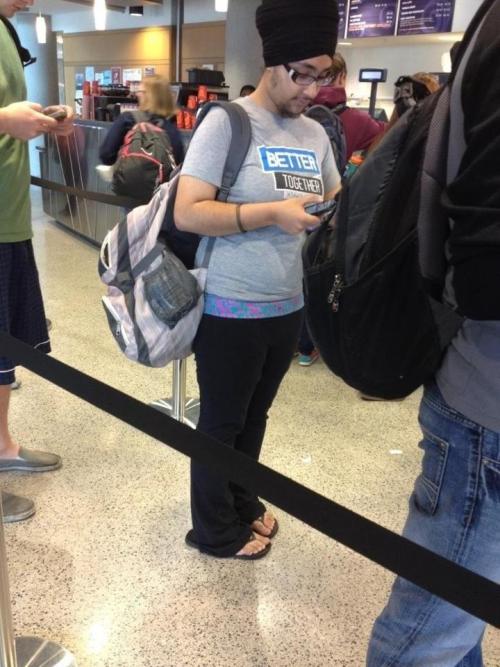
Reddit user “european_douchebag” (hold your comments) recently posted a photograph of Sikh woman and Ohio State University student, Balpreet Kaur, in the “Funny” section of the website with the caption, “I’m not sure what to conclude from this,” because of her visible facial hair. Kaur, president of the Sikh Student Association as a sophomore at OSU and aspiring neurosurgeon, responded with the most eloquent and graceful statement to the post, explaining that she is “not embarrassed or even humiliated by the attention [negative and positive] that this picture is getting because it’s who I am.” She writes:

“Yes, I’m a baptized Sikh woman with facial hair. Yes, I realize that my gender is often confused and I look different than most women. However, baptized Sikhs believe in the sacredness of this body - it is a gift that has been given to us by the Divine Being [which is genderless, actually] and, must keep it intact as a submission to the divine will. Just as a child doesn’t reject the gift of his/her parents, Sikhs do not reject the body that has been given to us.”

Kaur’s eloquence and confidence is a breath of fresh air that responds to intolerance by cultivating understanding and dialogue, not debate, across difference. Her statement even provoked “european_douchebag” to issue an apology, in which they conclude:

“So reddit I'm sorry for being an asshole and for giving you negative publicity.
Balpreet, I'm sorry for being a closed minded individual. You are a much better person than I am.
Sikhs, I'm sorry for insulting your culture and way of life.
Balpreet's faith in what she believes is astounding.”

3 cheers for Balpreet Kaur’s response to the Reddit post!

Hip: Kaur’s response creates religious and cultural tolerance by explaining some of the teachings of her faith that inform who she is and are different from Western culture. She uses this moment of ignorance as an opportunity for discussion and education, writing, “Just as a child doesn’t reject the gift of his/her parents, Sikhs do not reject the body that has been given to us.”

Hip: Kaur’s statement also affirms an acceptance of different standards of beauty by both being proud of her own and by providing a “transcendent” view of the body that is accepting of aesthetics, not judgmental of appearance. Kaur explains, “By crying ‘mine, mine’ and changing this body-tool, we are essentially living in ego and creating a separateness between ourselves and the divinity within us. By transcending societal views of beauty, I believe that I can focus more on my actions.”

Hooray: Kaur uses her words not as sticks and stones but as a tool for social awareness and tolerance. She uses the Internet as an opportunity to voice productive dialogue, not to continue anonymous cruel remarks. “So, if anyone sees me at OSU, please come up and say hello. I appreciate all of the comments here, both positive and less positive because I’ve gotten a better understanding of myself and others from this.”

Tuesday, September 25, 2012

5 Reasons Why Lady Gaga’s “Body Revolution 2013” Matters


Today Lady Gaga launched a response to the fuss over her recent weight gain. She recently acknowledged she gained around 25 lbs. but has made some conflicting comments about her attitude about her body in the past few months, sending mixed signals about body image acceptance for those who follow the mantra “Born This Way.” In April, she Tweeted: “Just killed back to back spin classes. Eating a salad dreaming of a cheeseburger #PopSingersDontEat #IWasBornThisWay” while this month she responded to the commentary about her weight gain with, “I really don’t feel bad about it, not even for a second.”

But today Lady Gaga set the record straight by announcing a “Body Revolution 2013” on LittleMonsters.com. She revealed her personal battle with anorexia and bulimia since 15 in a caption to a series of unretouched photographs of herself in underwear. She wrote:

“But today I join the BODY REVOLUTION.
To Inspire Bravery.
and BREED some m$therf*cking COMPASSION”

Lady Gaga also Tweeted naked photo of herself today, honoring her body in spite of the recent press about her weight gain, and announced call to action on Facebook.

Here are 5 reasons why Lady Gaga’s “Body Revolution 2013” matters:

1.     Lady Gaga is actively confronting the prevalence of fat-shaming prejudices in our culture as represented by the media. Her photographs on Twitter and LittleMonsters.com provoke rethinking of “fat,” “fat shaming,” and ultimately body image in general. Lady Gaga is using her celebrity to not only reveal a prejudice but to create a call to action.
2.     “Body Revolution 2013” reiterates the affirmation, “Born This Way,” in the context of body image and self-love. As Dodai Stewart observes in Jezebel’s breakdown of Gaga’s “embodying bravery”, “By posting these homemade, raw, here-I-am-with-all-my-flaws (not that we see any) images, she shows that her struggle is the same struggle millions of other men and women have everyday: Learning to love yourself just the way you are, finding and believing you are beautiful when the media is hellbent on making you think you're fat and ugly (and that fat is the same as ugly).”
3.     It made Terry Richardson, who isn’t always the poster child of positive portrayals of women, speak up. Richardson defended Gaga and, whether he meant to or not, defended the acceptance of bodies by posting “Lady Gaga Unretouched #1” on his online diary.
4.     The portraits from LittleMonsters.com acknowledge the body beyond its aesthetics by celebrating physical ability. In one photo, Lady Gaga is in the yoga pose, Anyvittasana, or Standing Backbend, honoring her body in physical practice.
5.     Today’s announcement creates awareness about eating disorders because Gaga gives voice to the realities of anorexia and bulimia. Lady Gaga gives a face to this often typified reality with her self-portraits in her underwear, and the juxtaposition between the distorted, unflattering photos of her in Amsterdam and her personal photos suggest that society’s warped perceptions of beauty have in part been caused and perpetrated by the media that recently fat-shamed the singer.

Sunday, September 16, 2012

Protagonist & Praxis: Moonstruck

Cher’s 1987 Moonstruck won 3 Oscars for its portrayal of Loretta (Cher) and Ronny’s (Nicolas Cage) unconventional, inconvenient, and quirky love story. The interwoven stories, from the relationship between Loretta and Ronny, her fiancé’s brother, to the rekindled romance between Loretta’s uncle and aunt to the challenges within her parents’ marriage, reveal the interconnectedness of family bonds, the changing faces of love across generations, and the timelessness of “snap out of it!”.


Grandpa Castorini loves his dogs: he feeds them at the dining room table, sings opera to them, and loyally walks them around New York City throughout the film. Support no-kill shelters like the Anti-Cruelty Society of Chicago through donation or adoption.

In homage to Ronnie’s job at a bakery, try the Bay Area’s famous Acme Bread Company. Co-founded by Chez Panisse’s Steve Sullivan and voted one of the top 20 bread companies in the country by Saveur in the spring of 2012, Acme has been the staple of California organic bread for nearly 30 years. 

Enjoy the music of Puccine’s La Boheme, the opera Ronnie takes Loretta to see on their date with the famous box set with Luciano Pavarotti, Mirella Freni, Elizabeth Harwood, Rolando Panerai, and Nicolai Ghiaurov.

Perhaps the best scene is when Raymond and Rita Cappomaggi, Loretta’s uncle and aunt, see Cosmo’s Moon, inspiring the film’s title. SkyView is a free app that reveals constellations, planets, and stars when you aim your iPhone and iPad anywhere, any time of day.


Wednesday, September 5, 2012

Nina Simone’s Upcoming Biopic: Negotiating Between the Representation and the Legacy

 
Nina Simone, the Jazz singer, songwriter, pianist, civil rights activist, and High Priestess of Soul is about to be honored in a biopic staring Zoe Saldana. Not everyone is happy about it.

The biopic is unauthorized by Simone’s estate and is heavily criticized by the singer’s daughter Lisa Celeste Stroud, who goes by the stage name, Simone, for biographical and casting reasons. The choice to cast Saldana has caused the most controversy around the film because of Saldana’s lack of resemblance to Simone, which is significant because the singer was discriminated against and told she would not be successful because of her appearance. According to the singer’s daughter “As a child, my mother was told her nose was too big and she was too dark.” Saldana does not share those physical attributes, thus she would not illustrate the aesthetic that Simone was prejudiced against for, and Stroud would prefer “women with beautiful, luscious lips and wide noses and who know their craft” to portray her mother accurately.

More criticism of the film arose around the portrayal of a love plot between Nina Simone and her manager, Clifton Henderson, in the film. According to Stroud, “Clifton Henderson was gay. He was not attracted to women. So, the truth is…Nina Simone and Clifton Henderson NEVER had a relationship other than a business one.” Further criticism of Simone’s dark side has arisen over the concern that it will be either glossed over as a mere lapse in judgment or as an incriminating part of Simone’s character. Either way, it could oversimplify what Stroud doesn’t want compressed: that “the whole arc of her life which is inspirational, educational, entertaining and downright shocking at times is what needs to be told THE RIGHT WAY.”

The controversy over Nina Simone’s upcoming biopic illuminates more than the importance of biographic accuracy and the casting of lead roles: it also highlights the importance of not wrapping up a person’s life in a pretty little bow within the biopic genre. As Landon Palmer writes on the limitations of biopics, “the biopic traditionally, in a strange way, positions itself as ‘the last word’ on its subject’s life, as the final negotiation between the public and private persona.” The biopic must negotiate between representation and oversimplification, which is a hard balance to maintain especially for legendary figures that tempt directors to either live up to the figure’s hype or deconstruct the perfection of celebrity, both resulting in typifying the real person.

Solvej Schou writes in Entertainment Weekly, “How do you recreate or reinterpret that, the breath of a musician’s life, their art, as a biopic, on film?” The answer is, clearly, with difficulty.

In the case of Simone, her biographical history is important insofar as it tells a story of race, from the issue of her aesthetics to her rejection from the Curtis Institute for what she believed was racism, and of musical influence, from Simone’s popularization of “I Loves You Porgy” to her reappopriation of Bob Dylan’s “I Shall Be Released,” to name a few landmarks. Simone’s legend is equally important to keep in tact, perhaps best in memory instead of representation, as what she called the “mass hypnosis” of her audience was famously commanding, consuming, and mystical in a way unique to Simone.

What is important for Simone’s biopic, like any other, is to not typify her life or categorize her legacy. A biopic should represent a person’s life without glamorizing or simplifying the biography, and it should illuminate what makes the central figure revolutionary. Perhaps most important for the biopic, however, it that it should maintain some of the mystery—the allure—of the legend. As Stroud notes, “Nina Simone was a voice for her people and she spoke out HONESTLY, sang to us FROM HER SOUL, shared her joy, pain, anger and intelligence poetically in a style all her own.” 

Saturday, September 1, 2012

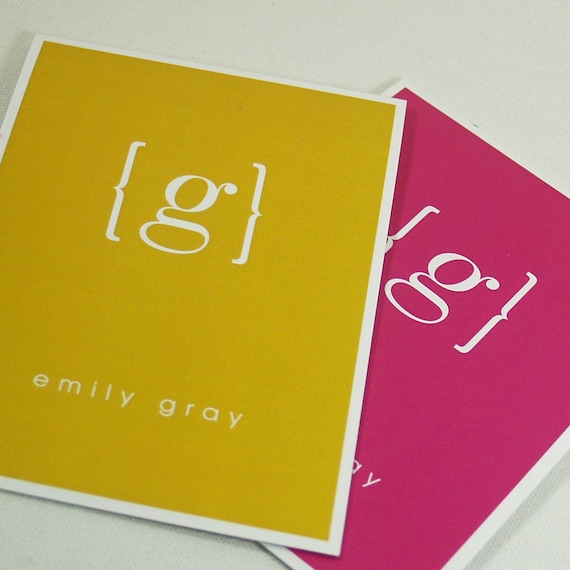
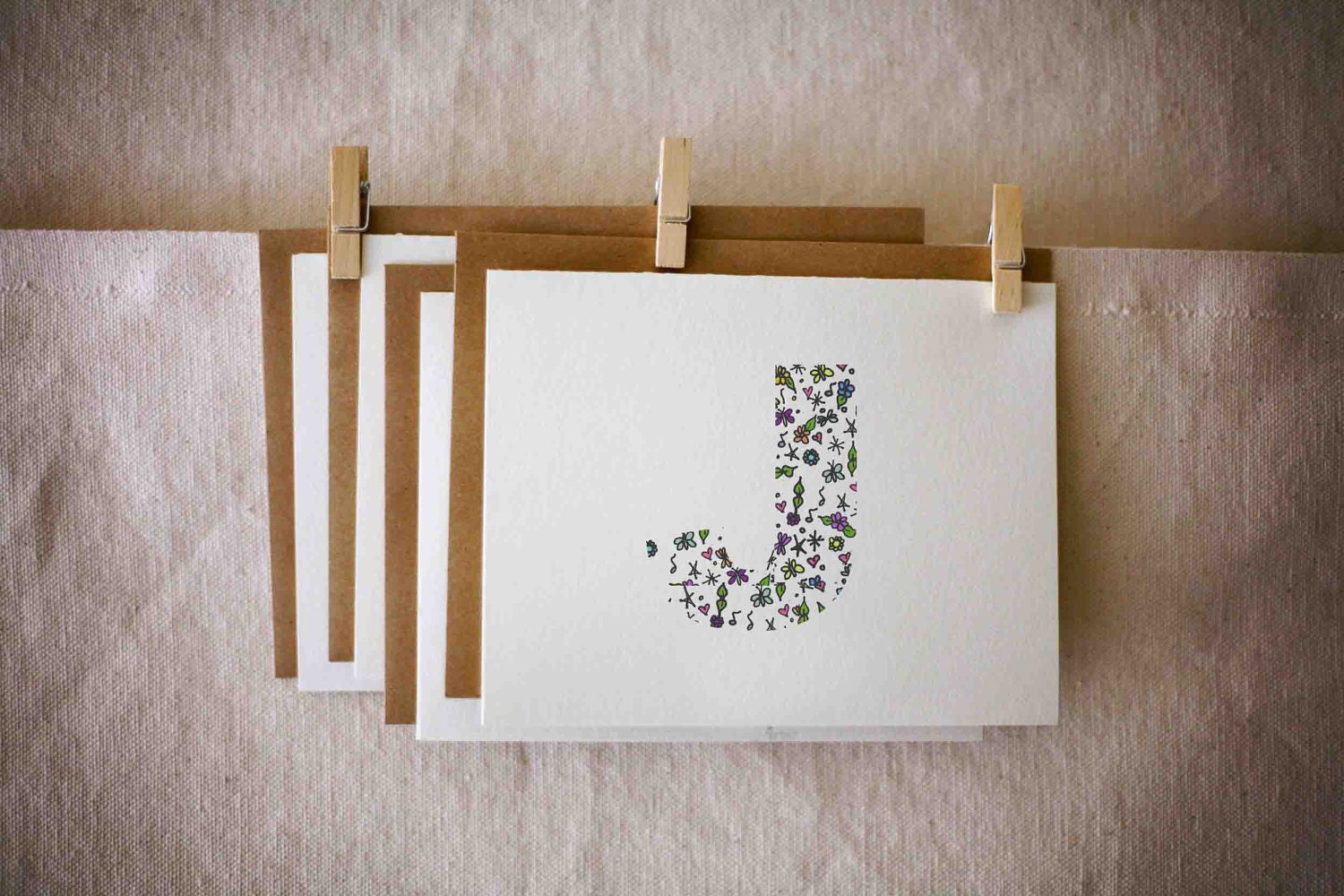
5 Monogrammed Stationary Sets

 Sign off your note from the start with monogrammed stationary. Vive le snail mail!


 From naomilynn at her Etsy shop


 From MeandWee at her Etsy shop


From JoyInspiration at her Etsy shop


From Minted

Monday, August 27, 2012

“Legitimate Rape” and Our Culture’s Confusing Messages About Rape and Sexual Violence


The most recent “oops” from men on women’s biology and reproductive rights comes to us from Todd Akin, Republican Congressman from Missouri. He told a St. Louis television station that there is, apparently, such a thing as “legitimate rape” and that when it happens, women do not get pregnant because, evidently, their lady bits turn off in order to prevent conception. Akin explains, “If it’s a legitimate rape, the female body has ways to try to shut the whole thing down.” Apparently, abortion can be regulated based on “legitimacy” of the sexual act that led to conception. This made some people angry.

Aside from Akin’s horrifyingly inaccurate biology knowledge, which Democratic Senator from Missouri, Claire McCaskill, called “ beyond comprehension that someone can be so ignorant about the emotional and physical trauma brought on by rape,” his innuendos about legitimacy and validity in rape is destructive and, unfortunately, not an uncommon offense in the past few months.

Akin is one of many contemporary male politicians who have made problematic public remarks about rape and sexual abuse that misinform the public on social norms, legality, and gender relations and also reinforces a culture of victim blaming. On August 20th, former Republican governor of Arkansas Mike Huckabee used the phrase, “forcible” rape, suggesting that rape is not always forced on women as violations or abuse. In the UK, Justice Secretary, Kenneth Clarke claimed “date rape” was less “serious” than other attacks and George Galloway, the Respect MP, played down the sex crime allegations against Julian Assange. In 2011, Roger Helmer made a distinction between “classic stranger rape” and “date rape,” writing on his blog, “rape is always wrong, but not always equally culpable.” As Louise Mensch of The Telegraph writes, “Rape is having a moment. And not in a good way… from the Left and the Right, male politicians and two-bit “public figures” have made common cause on rape. Not to condemn it, or to pledge tougher action in policing it; but to minimize and dismiss it as a crime.”

The current trend of misinformed and judgmental conversation about rape and sexual abuse in politics is complicated by the mixed signals about healthy sexual relationships in pop culture because both risk misinforming people about sexual violence. The rise of S&M literature that romanticizes sexual dominance, vampire fantasies with violent sexual themes, and music that glamorizes aggressive sexuality only feeds the flame of considering some acts of sexual violence more acceptable than others. The Fifty Shades of Grey series is empowering for many men and women, but it also sends confusing signals about healthy relationship dynamics and power hegemonies between couples. The vampire craze offers a mystical love plot but also confusingly mingles sexual and violent interactions, and recent Top 40 songs have popularized themes of rape and sexual dominance, notably Rihanna’s “S&M” (“Now the pain is my pleasure”) and Katy Perry and Kanye West’s “E.T.” (“Take me, take me / Wanna be a victim / Ready for abduction”). While these trends have promoted acceptance of diverse sexualities, they also risk blurring the line between consent and rape. Clearly there should not be a prescribed “normal” sexuality, but our society needs to make it clear that rape is never “illegitimate,” regardless of sexual preferences.

Without dismissing diversity in sexuality, politicians and the media need to send a clearer message about what sexual violence is, how to recognize it, and how to react to it. Establishing a clear definition of rape and abuse does not conflict with acknowledging sexual diversity and these public spheres need to be responsible for communicating that distinction so that our culture does not become complacent or ignorant of violence.