Thursday, August 23, 2012

Southern Knuckledraggers Admit Women to the Augusta National Golf Club in 2012


The gentlemen from the Augusta National Golf Club, host of the Masters Golf Tournament, finally admitted its first women members, Condoleezza Rice and Darla Moore, in its 80-year history on August 20th, just 22 years after first admitting black men members. This landmark event inspires a memory from a scene from the sagacious film, Caddyshack, when Al Czervik tells his Asian American golf buddy, “I hear this place is restricted, Wang, so don't tell 'em you're Jewish, okay?”

Tim Kawakami of the San Jose Mercury News calls the landmark event the “end of a Neanderthal policy.” Even Obama "thinks it was too long in coming, but obviously thinks it's the right thing to do," according to White House spokesman, Jay Carney. So this was “a long time coming.” But why did it take so long? How did Augusta National manage to remain current—hosting the Masters Tournament and maintaining members like Bill Gates, Pete Coors, and Warren Buffett–when it had such archaic and offensive traditions? More importantly, even if this was a long time coming, what is most problematic is that it took so long to happen and American women had to wait for the Good Ol’ Boys Club at Augusta to take their time inviting women to tee off.

Augusta National was not upholding any honorable traditions when they excluded women until Monday and African Americans until 1992: they upheld racism and sexism. Until 1983, Augusta National’s caddies were exclusively African American, a relic of Jim Crow that ignored the social revolution since the end of the laws in 1965. Augusta National also struggled to keep up with women’s issues, as evident by former Masters Tournament Chairman, Hootie Johnson’s, 2002 remark, “There may well come a day when women will be invited to join our membership, but that timetable will be ours and not at the point of a bayonet.” Why was 2002 not on his “timetable” for gender equality?

Elisabeth Bumiller of the New York Times opened her story the day of the announcement with, “Condoleezza Rice has lived a life of firsts: first black woman to be Secretary of State, first black woman to be national security adviser and the first African-American, first woman and youngest person to be provost of Stanford University. On Monday, she added another first when she became one of the first two female members admitted to Augusta National Golf Club.” Bumiler brings up an important point: Condoleezza Rice is a trailblazer for 20th and 21st century women of color. Yet why is Augusta National even on the list her of unprecedented accomplishments? Isn’t it problematic that her membership is significant enough to add? Moreover, shouldn’t someone else have broken that barrier a long time ago?

In Ms. Magazine Blog contributor, Rebecca Nelson’s, piece on Rice and Moore’s recent membership, she highlights the elitist, sexist, and racist ideology implicit in the club’s requirements for membership. She recalls sociologist Jessica Holden Sherwood’s 2010 article for Ms. that examines how the exclusive club mentality creates “breeding grounds for a toxic mentality” and affirms the homogenization of the privileged class. Holden Sherwood observes, “symbolic boundaries like these feed and legitimate all class, race and gender inequalities.” Augusta National’s tradition of exclusion is an intolerance of difference and, as a result, reinforces problematic hierarchies among race, class, and gender spheres. With luck, the inclusion of Rice and Moore will point the club’s community toward inclusion of diversity without inequality and will inspire and reflect an ideal for our current society.

While Monday’s announcement is an accomplishment for American women, it is also a testimony to how far we have to go in achieving equality in the 21st century. One consolation walking away from this is that “golf” is finally no longer synonymous with “Gentlemen Only, Ladies Forbidden.”

Tuesday, August 14, 2012

Competitiveness Confused With Being a Diva and Not Being “Impressed,” and The Commodification of Hot Athletes: What The Olympics Reveal About Our Gender Biases


The 2012 Olympics in London has included many triumphant moments for international athletes beyond the podium. Male athletes enjoyed landmark events such as Michael Phelps’ record number of Olympic medals and double amputee Oscar “Blade Runner” Pistorius’s competition in the 4x400. Female athletes also experienced history-making achievements from the first-ever inclusion of women’s boxing (see this interview from WBEZ’s “The Afternoon Shift” on the documentary, “Go For It: Life Lessons From Girl Boxers”) to the praise of Misty May-Treanor and Kerri Walsh for their third gold in women’s beach volleyball to US Olympic gymnast, Gaby Douglas’, mature response to criticism of her hair. Yet amid these achievements were also events that were evidence of lingering biases against competitive women and single, successful men, revealing problematic social norms for both genders.

The McKayla is Not Impressed meme has become one of the m buzzed about and visited memes since its inception on August 7th, 2012. The meme features American gymnast, McKayla Maroney’s, face after not winning gold in the women’s vault photo shopped into scenes like the an image of the Taj Mahal, the White House cabinet getting briefed on Osama bin Laden’s death, and the birth of Jesus. Some of the memes are witty commentaries like Mitt Romney’s VP choice or jabs at Justin Bieber, yet others like Maroney’s supposed lack of amusement at the Pyramids and Paralympics athletes competing suggest that she is simply a bitch with a bad attitude. The meme’s playfulness with Maroneys frustration over not winning gold risks interpreting her drive and competitiveness with being bitchy and ungrateful. Why is this female Olympian’s expression after losing first place synonymous with not being “impressed” with anything else in the world? Is this a gender-based meme that confuses competitiveness and disappointment with being a prima dona?

Similarly, the NBC coverage of the Russian Olympic women’s gymnastics team included the gender-biased word choice, “diva,” in describing the Olympians’ training styles and relationship with their coach. Dvora Meyers' Jezebel article on NBC commentators’ poor word choice draws attention to the problematic association between women’s motivation, focus, and training style with “truly negative, un-sportswoman like behavior” characteristic of a diva.

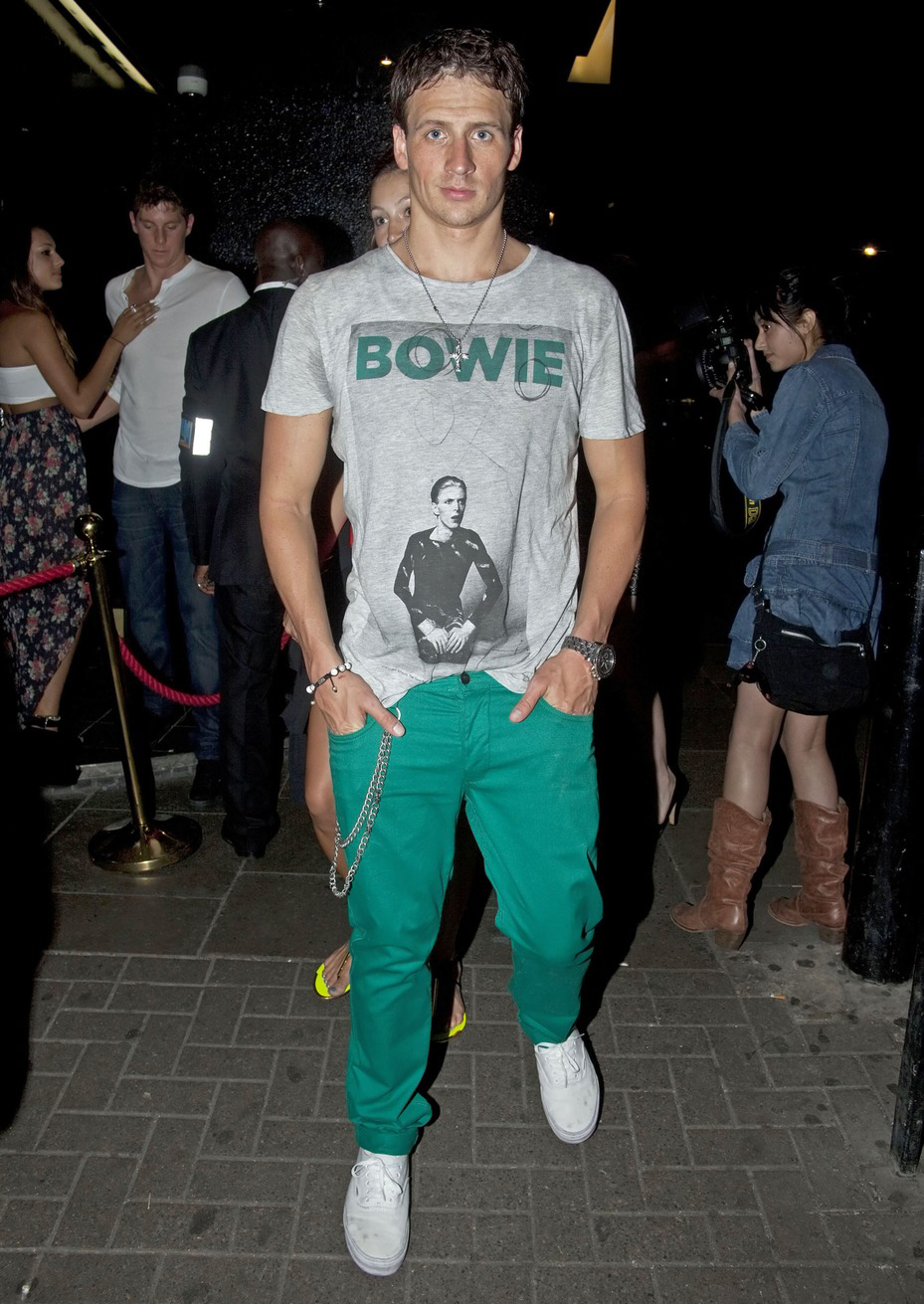
Male athletes also received special attention from the media that sometimes confused attractiveness with sexual permissiveness. Swimmer Ryan Lochte is an eleven-time medalist yet the majority of press about him this Olympics revolved around his personal and sexual life. Rumors continually swirl about his latest girlfriend(s), photos like this one pop up with Lochte out clubbing (with special attention to his sartorial choices), his mother unfortunately told the press he only has time for “one-night stands” upon repeated questioning about his dating life—thus forcing Lochte to clarify that his mother doesn’t even know what that means and that she meant he is “not in a relationship so I do go on dates”—and recently he has been courted to join Dancing with the Stars and The Bachelor. The athlete’s appearance has gained more attention than his professional success, making Lochte’s sexual life a proverbial piece of meat for the press to gnaw on. The commodification of Olympic athletes is not uncommon given the void in professional options post-games and is therefore not always bad attention for the athlete, yet Lochte’s offers and media attention are based solely on his appearance and the press’s assumption that he is a womanizer. At least Apollo Ohno’s endorsements with Subway and Nyquil don’t involve him handing out roses to beautiful but crazy women.

The problematic gender portrayals of Olympic athletes come down to what sells: womanizing guys, diva Russians, and bitchy silver medalists. They are easily packageable images of womanhood and manhood that people respond to. The question is: will we as internet users, TV watchers, and blog readers ever change our response and eventually get frustrated with these prescribed roles, demanding new portrayals of Olympians?

Sunday, July 29, 2012

Marissa Mayer: Crisis Over Motherhood and Womanhood in the 21st Century


On July 16, 2012 Marissa Mayer was named the President and CEO of Yahoo! and became both the youngest and the first pregnant CEO of a Fortune 500 company. At nearly 7 months pregnant, Mayer told Fortune, “I like to stay in the rhythm of things. My maternity leave will be a few weeks long and I'll work throughout it." Her choice to forego maternity leave caused uproar among working and stay-at-home mothers over the importance of bonding with one’s child, the pressure on women to perform as equals to their male counterparts, and Mayer’s personal parenting choice as a public figure.

While the debates have drawn attention to both the inadequacies of American policies on paid family leave and the “society-wide struggle to reconcile women’s growing power with their maternal role,” as outlined by Michelle Goldberg of the Daily Beast, it has also revealed our anxieties about biology in defining gender expectations. The bulk of the critiques are rooted in the desire to make Mayer the posterwoman for working mothers who successfully achieve the work-life balance. Her failure to fulfill the maternal role prescribed by other working mothers like Todays Mom and Mommyish has angered some feminists and mothers who think Mayer’s choice is shortsighted, a bad example for working mothers, and a slap in the face to the nurturing maternal role. The Washington Post’s Janice D’Arcy asks, “What’s the benefit of a new mom in such a high-profile position if she’s going to act like she doesn’t need maternity leave?” D’Arcy adds, “does Mayer have a responsibility to advocate for the rest of working parents?”

Given the pressure on Mayer to be a figure of a specific agenda, the anxiety over her choice to skip maternity leave is clearly based on her biological difference as a pregnant woman CEO of a Fortune 500 company. While some have resisted acknowledging the importance of Mayer’s biology, it remains the crux of the debate. Roland Martin of CNN writes in his article, “Focus on Marissa Mayer’s brain, not her pregnancy,” “Every time a woman is in position to ascend to the top post, be it in politics or business, we immediately begin to question her uterus instead of her brain.” Roland is correct to point out the problematic gendered critique of Mayer’s choice and its distraction from her intellectual merit, but his analysis is incomplete because biology was on the table when Mayer was initially praised as the first pregnant CEO of a Fortune 500 company. Mayer’s biology has been both honored and claimed irrelevant: we cannot have it both ways, and in fact it is important.

Martin’s observations tap into the longtime debate among feminists over the importance of biology. They have been divided on the role of biology in defining womanhood since the 1970s, caught between claiming whether womanhood is based on biology or if it is a social construct (see Judith Butler). In the case of Mayer, if biology doesn’t matter then the focus should shift to her intellect. If it does, the feminist lens should focus on Mayer’s choice as a mother and professional woman instead of prescribing and projecting a social role.

What harm does this debate really cause among working mothers and social roles on the whole? It is not simply the void of a role model or the struggle for better paid family leave or even the definition of the maternal role: it is the failure to respect individual women’s choices as mothers and as businesswomen. Mayer has become a caricature of an agenda composed of projections by professional male counterparts, working mothers, stay-at-home mothers, and future mothers. The placing of a woman or a group of women on a pedestal of projected norms and expectations ironically participates in part of what feminism has responded to for decades. Women should not be expected to conform to specific gender roles, social norms, or specific choices and should instead be empowered to make their own decisions and fulfill their own personal expectations for themselves.

Regardless of opinions about Mayer’s shortsightedness in skipping maternity leave, on her foregoing the opportunity to be a role model for working mothers, and her failure to use her public image to draw attention to paid family leave issues in America, Mayer is still entitled to her choice as a working woman and future mother. Given that her biology has put her in the spotlight as a pregnant woman, our 21st century progressive focus needs to shift toward Mayer’s entitlement to choose her own biological, maternal, and professional roles.

Tuesday, July 24, 2012

Protagonist & Praxis: "Chocolat"

 
Chocolat tells the story about Vianne, (Juliette Binoche) her daughter, Anouk, and their enchanting chocolate shop in early 20th century France. Their nomadic life brings them and their recipes to a small Catholic town during Lent, creating a contrast and eventual harmony between traditional religious practice and the mystical powers of Vianne’s chocolates.


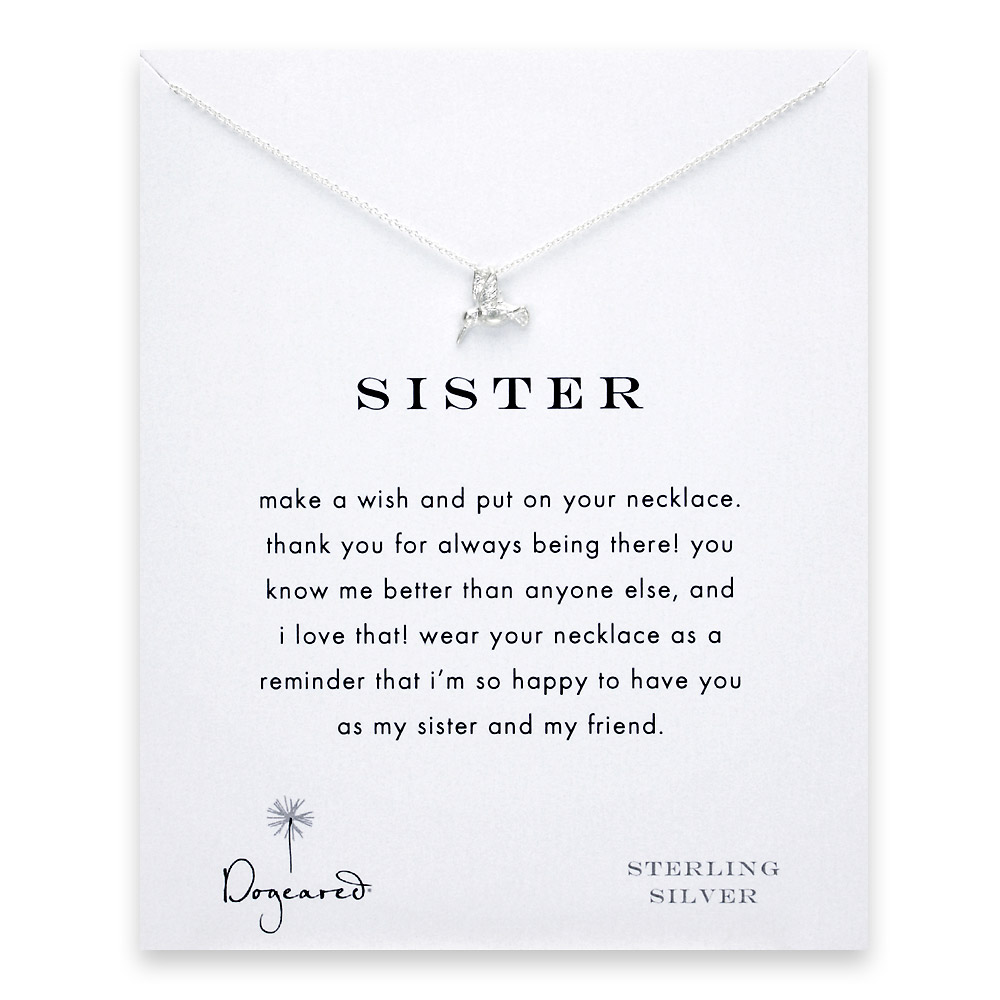
Sisterhood Necklace: Vianne’s restorative friendship with Josephine and close relationship with her daughter inspire a strong community of women. Check out Dogeared’s Sister collection here.

Gypsy Advocacy: Johnny Depp’s gypsy, Roux, charms at boat parties with guitars and dancing, but his rejection from the town points to the reality of oppression against Gypsies worldwide. Support causes like Friends Family and Travellers that seek to end discrimination against Gypsies and other nomadic and immigrant groups.

Mayan Hot Chocolate: Embrace the Artist in the Kitchen, Kathryn Lee Seidel’s term that honors the creative in domestic work. In homage to the name of Vianne’s shop, Chocolaterie Maya, try this Mayan Hot Chocolate recipe inspired by the one Judi Dench’s character loved in the film.

Tuesday, July 17, 2012

5 Reasons Why American Apparel’s New Ad Campaign Might Redeem a History of Problematic Advertising

 
During the week of July 4th, American Apparel debuted a new advertising campaign with “advanced” model, Jacky O’Shaughnessy. O’Shaughnessy was discovered in February of this year, launching her modeling career at age 60. The campaign deviates from its history of controversial ads that use nudity to advertise clothing and hints, if only briefly, at an advertising strategy that does not rely on the hypersexualization of homogenous female bodies. 

Here are five reasons why the campaign may redeem American Apparel’s sub par track record:


1. The campaign has fewer problematic images of women and is void of excessive side boob, visible nipples through diaphanous shirts, public hair, and ample cheeckage.
2. The ad creates positive controversy, generating awareness of various body types and ages instead of igniting frustration over hypersexualized images of similar-looking models.
3. O’Shaughnessy disrupts the classic high-fashion narrative of underage, underweight models, making room for inclusive ideals of beauty and for new standards in the industry.
4. O’Shaughnessy, whose look is much like today's Lauren Hutton, is unique because unlike Hutton, she is famous in her 60s without any past fame as a standard looking, youthful model. Her professional success is based on her current appearance, not a past aesthetic, suggesting today's beauty standards might be expanding.
5. The ads deviate from American Apparel's past advertising campaigns that seem to overcompensate for the already appealing sweatshop free, American-made trademark. These ads (sort of) do not rely on jazzing up the ethical parts of the American Apparel brand with compromising images of young women in ads like this one for pants with a topless model.

Wednesday, July 11, 2012

A Response To The Criticism of Kate Upton’s Body: Why We Need An Empowering Community of Women


On June 10th, 2012 the “pro-skinny” blog, Skinny Gossip, published a post titled, “Kate Upton Is Well Marbled” that called her “thick,” “vulgar,” and “plus-sized.” The post writes, “Huge thighs, NO waist, big fat floppy boobs, terrible body definition – she looks like a squishy brick. Is this what American women are “striving” for now? The lazy, lardy look?...Has fashion become this?”

Since the release of this article, several feminist and fashion websites have responded. Jenna Sauers of Jezebel wrote a wonderful piece that highlights the tragedy of the website’s intolerance of Upton’s body image. She writes,  “If Kate fucking Upton's thighs are not immune from public dissection, then who is? The truth is, none of us are. As long as we live in a culture that tells women that being admired and desired for the way we look is merely the normal condition of womanhood, something fundamental to our sex, it will be considered acceptable to evaluate women for their decorative value.”

Hayley Phelan at Fashionista made similar claims about the bind that contemporary women find themselves between being labeled emaciated and plus-sized: “So if Crystal Renn is too thin, and Kate Upton is too fat, then what is the “ideal”? Can models–or regular women, for that matter–ever win when it comes to weight? The answer, as it is now, is no.”

Sauers and Phelan are right: the anxiety over visual representations of women in the media and the projections made on to everyday women is undeniable and it will not go away any time soon.

What informs these distorted body image fantasies? Is it the fashion industry, which has a long history of supporting unhealthy images of women? Perhaps, but the industry is currently trying to change their tune with the recent Vogue “Health Initiative” and the new Seventeen Magazine “Body Peace Project” that came after the advocacy of a fourteen year old girl.

Is it the unrealistic expectations of heterosexual men who have impossible ideals of femininity? Maybe, but it is important to note that Upton herself reached fame on the cover of Sports Illustrated 2012 Swimsuit Edition and is on the July 2012 cover of GQ as an addition to the canon of American bombshells.

While both the high fashion world and a few chauvinistic gentlemen contribute to the warped ideal of femininity, the current social attitudes among women also, surprisingly, adds to individual women’s critiques of their bodies. Though Skinny Gossip is no poster child for sisterhood, its tip for “Thinspiration” to “pay close attention to other girl's bodies. Pick them apart — try to find faults even with the best bodies. Then apply these high standards to yourself” is, sadly, not too foreign for many women.

Upton has been a source of criticism from other women for some time now and has been portrayed as a Jezebel figure of loose morals who would fall into the category of f**k in a game of F**k, Marry, Kill. She has been rejected from high fashion as a refined lady and instead has been branded a “page 3 girl” by Victoria’s Secret’s show runner, Sophia Neophitou, a reference to the promiscuous, voluptuous women featured in England’s The Sun. In Upton’s upcoming Vogue debut, the magazine writes, “it is in fact those two deeply abbreviated swaths of fabric on which Upton's not inconsiderable fame rests, which might make you think that this Sports Illustrated cover girl, almost always photographed nearly naked, is not exactly the ideal customer for Altuzarra's cuddly coat.” In an attempt to dance around the subject of Upton’s ladylike high fashion potential, they manage to suggest she is classless and subsequently cast her out of a clique of more respectable women. As Jezebel’s Sauers observes, “As long as women are in competition with one another to have the ‘best’ body, we all lose.”

Where is the space for change and new attitudes about women’s bodies? It lies within the establishment of a strong community of women who stop silently and verbally comparing themselves to one another, commenting on other women’s clothing, and suggesting a girl “eat a sandwich.” As feminist literary critic, Elaine Showalter, writes in her groundbreaking 1981 article, “Feminist Criticism in the Wilderness,” “a theory of culture incorporates ideas about women’s body, language, and psyche but interprets them in relation to the social contexts in which they occur.” In other words, women’s understanding of their bodies and ideas of self are informed by cultural contexts. For Showalter in 1981, that context was a phallocentric—male-centered—one, yet in 2012 many women have successfully found a social space that is uniquely feminine and largely outside of patriarchy.

But these spaces still lie within a context of competition between women and they need to be reimagined in a way that allows for more acceptance of womanhood. Showalter calls the space outside of patriarchy the “wild zone” that is “the place for the revolutionary language” and “liberated desire and female authenticity.” Using Showalter’s imaginary place of womanhood, women today can aspire to create a sisterhood that accepts different body sizes and expressions of femininity. In this way, intolerance from women like the anonymous one behind Skinny Gossip will not be welcomed and acceptance of women’s bodies will span across the fashion industry, men’s communities, and sisterhood alike.

Tuesday, July 3, 2012

Protagonist & Praxis: Everyone in 'Vicky Cristina Barcelona'


In Woody Allen’s 2008 film, Vicky Cristina Barcelona, friends Vicky (Rebecca Hall) and Cristina (Scarlett Johansson) have opposing views of love that represent dry stability and unfulfilling passion, respectively. Their summer in Barcelona, complete with meditations on Catalan culture, affairs with the charmingly eccentric Juan Antonio (Javier Bardem), and enchantments with the captivating Maria Elena (Penelope Cruz), inspires personal artistic and romantic journeys.

-Moleskine: Channel the artistic vision of Juan Antonio and Maria Elena’s paintings with a watercolor album like this to store musings and doodles.

-Sunhat: Maria Elena’s black sunhat carries her throughout her adventures with ease and sun protection. Grab one like this one from Anthropologie and get picnicking.

-Build Your Own Darkroom by Lista Duren & Will McDonald: This classic book can transform the average bathroom into a darkroom and the average iPhone snapper into a print photographer.

-La Nez Du Vin Wine Scent Kit: Get inspired by the ample supply of Spanish wines in the film and learn to recognize aromas within wines. Use the classic La Nez Du Vin Wine Aroma Kit to familiarize yourself with scents from sandalwood to tobacco to cherry.